A Practical Data Quality Framework: How to Improve Data Accuracy in Business
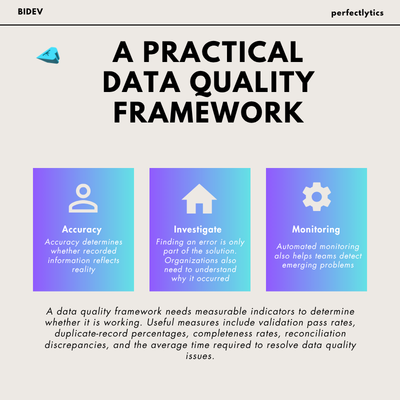
Reliable data is essential for effective business analysis, accurate reporting, and confident decision-making. However, many organizations struggle with incomplete records, duplicate entries, inconsistent formats, outdated information, and inaccurate figures across their systems. These issues can undermine business performance, increase operational costs, and reduce confidence in analytics. A practical data quality framework helps organizations identify these […]
How to Reduce Dashboard Overload: A Practical Guide to Building Clearer, More Effective Dashboards

Dashboards have become one of the most important tools for modern businesses. They help analysts, managers, executives, and operational teams monitor performance, identify trends, track key performance indicators, and make decisions based on data. However, as organizations collect more data and adopt more analytics tools, a new problem has emerged: dashboard overload. Dashboard overload occurs […]
How to Solve Complex Business Problems With SQL
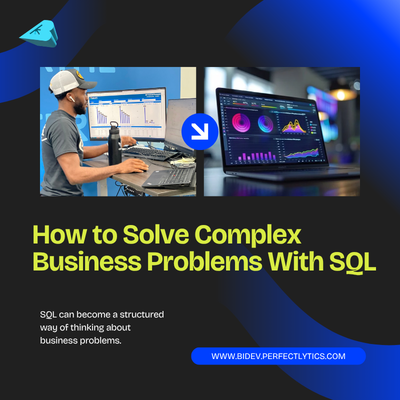
SQL is often introduced as a technical language for retrieving information from databases. For many professionals, learning SQL begins with simple tasks such as selecting records, filtering rows, sorting results, and calculating basic totals. Those skills are important, but they represent only the beginning of what SQL can do. In a business environment, SQL becomes […]
The Role of Data in Personalization
Personalization has become one of the most important strategies in modern business. Customers increasingly expect companies to understand their needs, preferences, behaviors, and circumstances rather than treating everyone as part of one large audience. Whether a customer is browsing an online store, receiving an email, using a financial application, watching content, or interacting with a […]
How to Build a Career at the Intersection of Business and Data
The modern business environment is increasingly shaped by data. Companies use data to understand customers, evaluate performance, optimize operations, forecast demand, manage costs, identify risks, and make strategic decisions. At the same time, organizations are under growing pressure to turn the enormous amounts of data they collect into measurable business value. This has created an […]
The Analyst as a Decision Facilitator
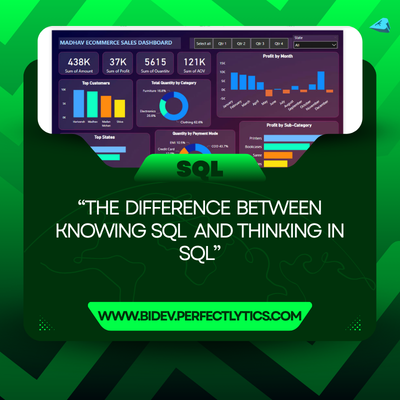
Why Great Business Analysts Do More Than Write Queries Structured Query Language, more commonly known as SQL, has remained one of the most valuable skills in Business Analysis, Business Intelligence, and Data Analytics for decades. While technologies have evolved, programming languages have emerged, and artificial intelligence has transformed how data is analyzed, SQL continues to […]
Turning Dashboards Into Decision Engines
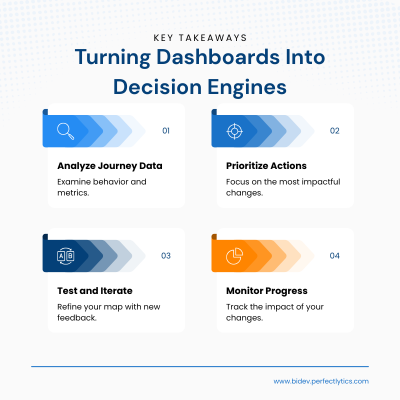
Business Intelligence has evolved dramatically over the past decade. Organizations now have access to more data than ever before. Every customer interaction, financial transaction, marketing campaign, operational process, and digital touchpoint generates information that can be collected, analyzed, and visualized. At the center of this transformation sits one of the most recognizable tools in modern […]
The Analyst as a Decision Facilitator
Moving Beyond Reporting to Real Influence In many organizations, the role of the analyst is still narrowly defined. Analysts are often seen as report builders, dashboard designers, data extractors, or model developers. Their work is appreciated, yet it is frequently treated as supportive rather than strategic. They are called upon to “pull numbers,” “validate figures,” […]
Why Some Analysts Get Promoted Faster

Promotion Is Rarely About Technical Skill Alone In every analytics team, a familiar pattern emerges over time. Two analysts may start at the same level, possess similar technical skills, and work on comparable projects. Yet within a few years, one moves quickly into senior roles, influences strategic discussions, and gains leadership visibility, while the other […]
Why Most KPIs Fail to Drive Action

Key Performance Indicators were created to bring clarity to business performance. They were meant to focus attention, align teams, and guide decisions. Yet in many organizations today, KPIs exist everywhere and influence almost nothing. Dashboards are full, reports are delivered on time, and numbers are discussed regularly. Still, actions remain unchanged. Meetings end without decisions. […]