Revenue is one of the most closely monitored metrics in any organization. Executives track it, finance teams reconcile it, sales teams pursue it, and business analysts continuously investigate the factors that influence it. However, while most organizations spend considerable effort generating new revenue, many overlook another equally important opportunity: protecting the revenue they have already earned.
This is where revenue leakage becomes a critical business problem.
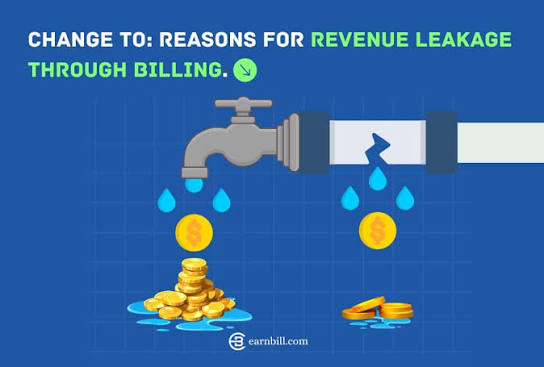
Revenue leakage occurs when a business fails to collect, recognize, or retain revenue that it should have received based on the products or services it provides. In many cases, the lost revenue is not caused by a single major event. Instead, it disappears gradually through pricing errors, incorrect discounts, billing inconsistencies, unbilled services, failed transactions, contract violations, refunds, data quality problems, or operational inefficiencies. Because these losses are often distributed across thousands or millions of transactions, they can remain invisible until the financial impact becomes significant.
For business analysts and data analytics professionals, this creates an important opportunity. SQL can be used not only to retrieve business information but also to investigate where expected revenue differs from actual revenue. By connecting transactional, customer, product, pricing, billing, and operational data, analysts can identify patterns that reveal where money is being lost.
The real value, however, is not simply finding unusual transactions. The goal is to understand why revenue leakage is occurring, quantify its financial impact, determine whether the problem is isolated or systemic, and provide decision-makers with evidence that supports corrective action.
In other words, SQL can become a powerful revenue protection tool.
Understanding Revenue Leakage
Before using SQL to detect revenue leakage, it is important to understand what the term actually means. Revenue leakage is not necessarily the same as fraud, theft, or accounting error. Although fraudulent activity can create revenue leakage, leakage can also occur through completely legitimate business processes that have not been designed, monitored, or executed effectively.
For example, imagine that a company sells a subscription service for $100 per month. A customer receives the service throughout the month, but the billing system accidentally charges only $80 because of an incorrect pricing rule. The customer may not have done anything wrong, and the company may not have intentionally offered a discount. Nevertheless, $20 of expected revenue has disappeared.
Now imagine that the company provides a professional service that should be billed according to the number of hours delivered. Employees record 15 hours of work, but only 10 hours are transferred into the billing system. The company has delivered the service but collected payment for only part of it.
Again, revenue has leaked.
The same problem can occur when contracts are not updated in billing systems, discounts remain active after their expiration dates, products are delivered without invoices being generated, subscriptions continue after pricing changes, or refunds are processed incorrectly.
Consequently, revenue leakage should be viewed as a gap between what the business should have earned and what it actually collected or recognized.
That gap can exist at multiple points in the revenue lifecycle.
A customer may purchase a product, but the transaction could fail during payment processing. A service may be delivered, but the billing record may never be created. An invoice may be generated, but the amount could be lower than the contracted price. A customer may be charged correctly, but an excessive refund could later reduce the collected amount. Therefore, identifying leakage requires analysts to understand the entire flow from customer activity to financial realization.
This is precisely where SQL becomes valuable.
Why Revenue Leakage Is Difficult to Detect
Revenue leakage is often difficult to identify because businesses tend to store the relevant information in different systems.
Customer information may exist inside a CRM platform. Product and pricing information may be maintained in an enterprise resource planning system. Transactions may reside inside an e-commerce database. Invoices may be stored within a billing platform. Payment information may come from payment processors, while contracts may exist in separate document management systems.
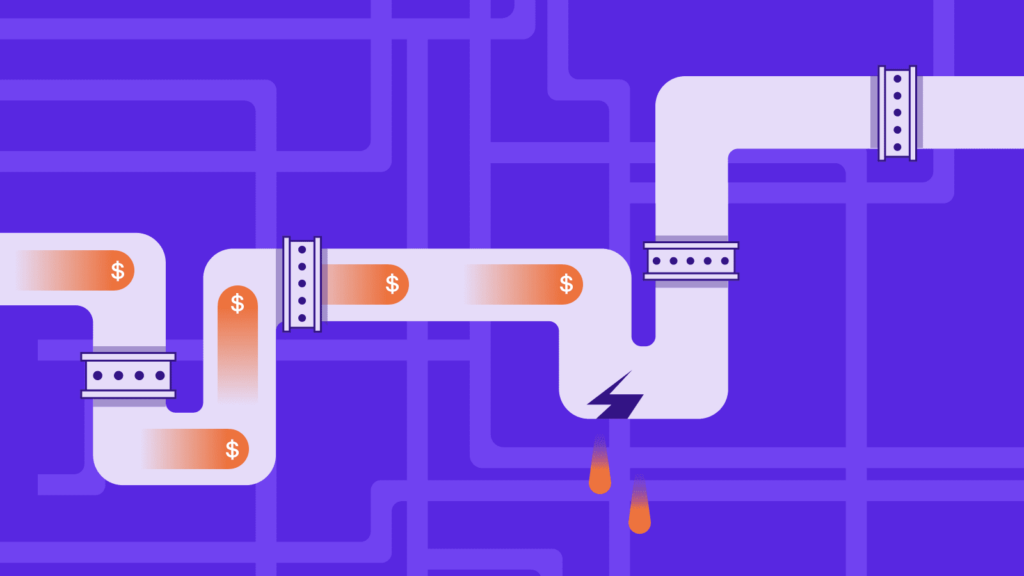
As a result, no single table necessarily contains the complete story.
Suppose an analyst wants to determine whether customers are being undercharged. Looking only at the transactions table may not be enough. The analyst may need to compare transaction prices against the official product price table, customer-specific contract terms, active promotions, and applicable discount rules.
This means revenue leakage analysis is fundamentally a relational problem.
The analyst must understand how different entities connect.
Customers are connected to orders.
Orders are connected to products.
Products are connected to pricing structures.
Customers may also be connected to contracts and discounts.
Orders may generate invoices.
Invoices may generate payments.
Payments may later be affected by refunds or chargebacks.
When analysts understand these relationships, SQL becomes much more than a reporting language. It becomes a mechanism for tracing financial discrepancies through the business process.
Starting With Expected Revenue
One of the most important principles in revenue leakage analysis is understanding the concept of expected revenue.
You cannot identify a revenue gap unless you have a reliable basis for determining what the business should have earned.
For example, suppose a customer purchases 10 units of a product with an approved unit price of $50. The expected revenue would be $500 before applicable discounts, taxes, or other contractual adjustments.
If the invoice shows $450, the analyst immediately has a potential discrepancy.
However, the difference does not automatically mean revenue leakage.
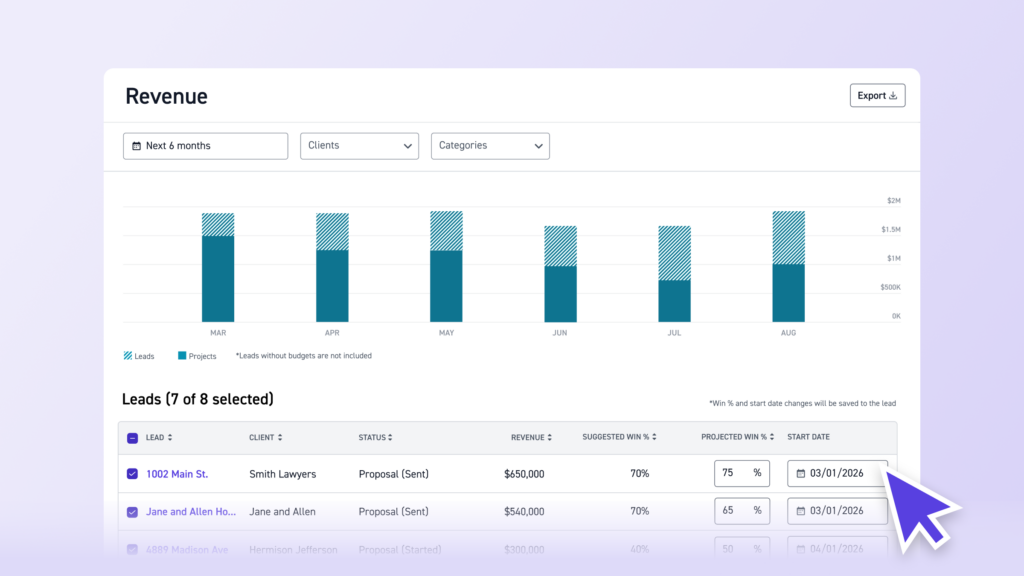
Perhaps the customer has a legitimate 10 percent contract discount. Perhaps a promotional campaign was active. Perhaps the customer purchased under a special pricing agreement.
Therefore, the analytical challenge is not simply finding differences.
It is determining whether those differences are justified.
This distinction is extremely important because poorly designed revenue leakage queries can generate thousands of false positives. If analysts flag every difference between list price and transaction price as leakage, business teams may quickly lose confidence in the analysis.
Consequently, the first step is to establish the correct revenue expectation.
SQL can then compare that expectation against actual transactional outcomes.
Conceptually, the analysis might involve calculating the expected amount from quantity, approved price, contract terms, and authorized discounts. That result can then be compared against the invoiced or collected amount.
The difference between these values becomes a potential leakage amount.
The larger the dataset, the more valuable this approach becomes because SQL can perform these comparisons across millions of records far faster than manual spreadsheet analysis.
Detecting Incorrect Pricing
Pricing inconsistencies are one of the most common areas analysts can investigate when searching for revenue leakage.
Businesses rarely maintain a single price forever. Products may have standard prices, regional prices, customer-specific prices, promotional prices, wholesale prices, seasonal prices, and contract-based pricing.
Consequently, a transaction can easily be processed using the wrong price.
Imagine that a product’s approved price increased from $75 to $85 at the beginning of a new quarter. However, some transactions continue using the old price because one sales channel did not receive the updated pricing configuration.
Individually, the difference may appear insignificant.

Across 20,000 transactions, however, the financial impact could become substantial.
SQL allows analysts to compare transaction-level prices against the price that should have applied at the time of purchase.
The critical factor here is time.
An analyst cannot simply compare every historical transaction against today’s price. Instead, the analysis must account for effective dates.
This is where thinking analytically becomes just as important as knowing SQL.
The analyst must understand that pricing is a temporal business rule.
A product could have one price during January, another during February, and another during March. Therefore, the correct price depends on when the transaction occurred.
By connecting transaction dates to pricing validity periods, SQL can identify transactions that appear to have used outdated or unauthorized prices.
This type of analysis can reveal problems that traditional revenue reports often miss.
Identifying Excessive or Unauthorized Discounts
Discounts are another major source of potential revenue leakage.
Discounting is not inherently problematic. In fact, discounts can be essential to customer acquisition, retention, competitive positioning, and sales strategy.
The problem occurs when discounts exceed approved limits or remain active longer than intended.
For example, a sales representative may be authorized to provide a 10 percent discount but accidentally apply 20 percent. Alternatively, a promotional code intended to expire at the end of the month may continue working for several additional weeks.
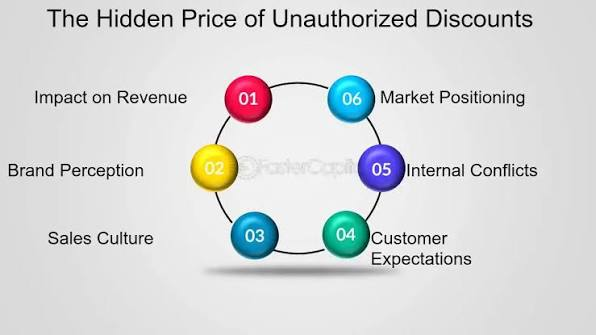
These situations create a measurable gap between expected revenue and actual revenue.
SQL can help analysts compare applied discounts with approved discount rules.
However, again, business context matters.
A 20 percent discount is not automatically a leakage event if the customer contract explicitly permits it. Therefore, the analysis should incorporate customer-specific rules, approval levels, promotion periods, and product restrictions whenever possible.
This demonstrates a broader principle of analytics.
The more accurately the business rules are represented in the data model, the more accurately SQL can detect anomalies.
If those rules exist only in people’s memories or informal processes, revenue leakage analysis becomes much harder.
Finding Unbilled Products and Services
One of the most valuable revenue leakage investigations involves identifying products or services that were delivered but never billed.
This problem is particularly common in organizations where operational and financial systems are not fully integrated.
Consider a consulting company that records employee work hours in one system and generates invoices through another. An employee completes 30 billable hours, but only 25 hours reach the invoicing system because of a data transfer problem.
The organization has completed the work.
The customer received the service.
The employee was paid.
Yet five hours were never billed.
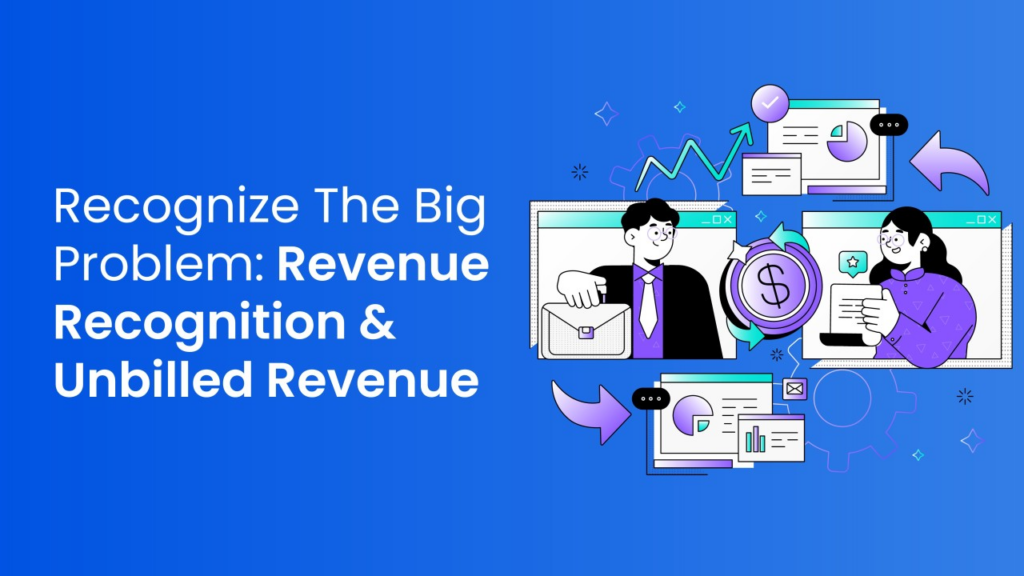
From a financial perspective, those five hours represent potential revenue leakage.
SQL can compare operational activity against billing records to identify these discrepancies.
The same principle applies to logistics, telecommunications, healthcare, SaaS, construction, and many other industries.
A telecommunications provider might detect active services that are not appearing on customer bills. A SaaS company might identify active accounts that are not associated with current subscriptions. A logistics company might discover completed deliveries that do not have corresponding billing records.
The exact business process changes by industry, but the analytical principle remains consistent.
Compare what happened operationally with what was financially recorded.
Where the two diverge, investigate.
Detecting Duplicate Refunds and Excessive Refunds
Revenue leakage does not always happen when money enters the business. It can also occur when money leaves.
Refunds, credits, chargebacks, and adjustments can significantly reduce realized revenue, particularly when processes are poorly controlled.
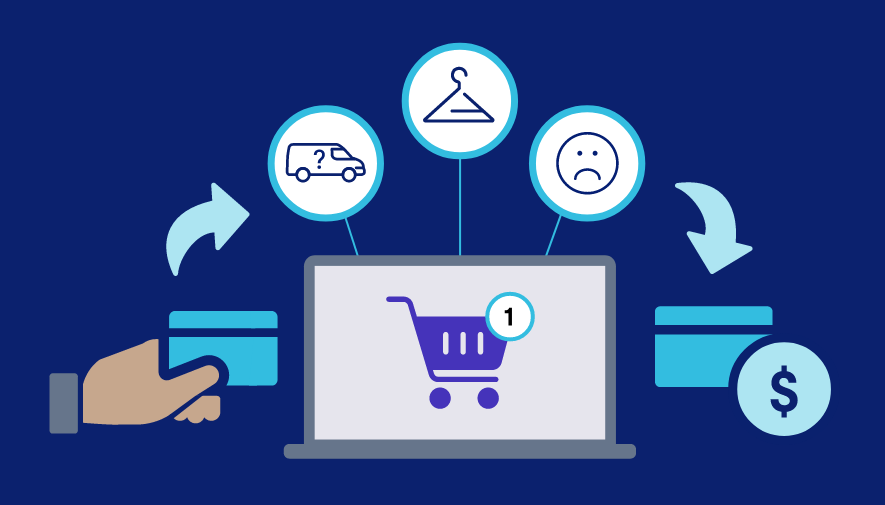
Suppose a customer requests a refund for a $500 purchase. The business processes the refund correctly. However, because of a system error, the same refund is processed twice.
The customer receives $1,000 back.
The company has effectively lost an additional $500.
SQL can detect duplicate refunds by examining transaction identifiers, customer identifiers, refund dates, amounts, and original purchase references.
More importantly, SQL can identify patterns rather than isolated incidents.
Perhaps duplicate refunds occur disproportionately within a particular payment channel. Perhaps one branch has an unusually high refund rate. Perhaps refunds processed manually have significantly higher values than automated refunds.
These patterns can point analysts toward the underlying process responsible for the leakage.
Therefore, revenue leakage analysis should not stop at identifying individual anomalies.
The deeper objective is understanding whether the anomalies represent isolated errors or systemic weaknesses.
Investigating Failed Payments and Uncollected Revenue
Another important source of leakage is payment failure.
A customer may complete an order, but the payment may fail because of insufficient funds, technical errors, expired cards, processor issues, or other reasons.
If the business has no effective recovery process, the expected revenue may never be collected.
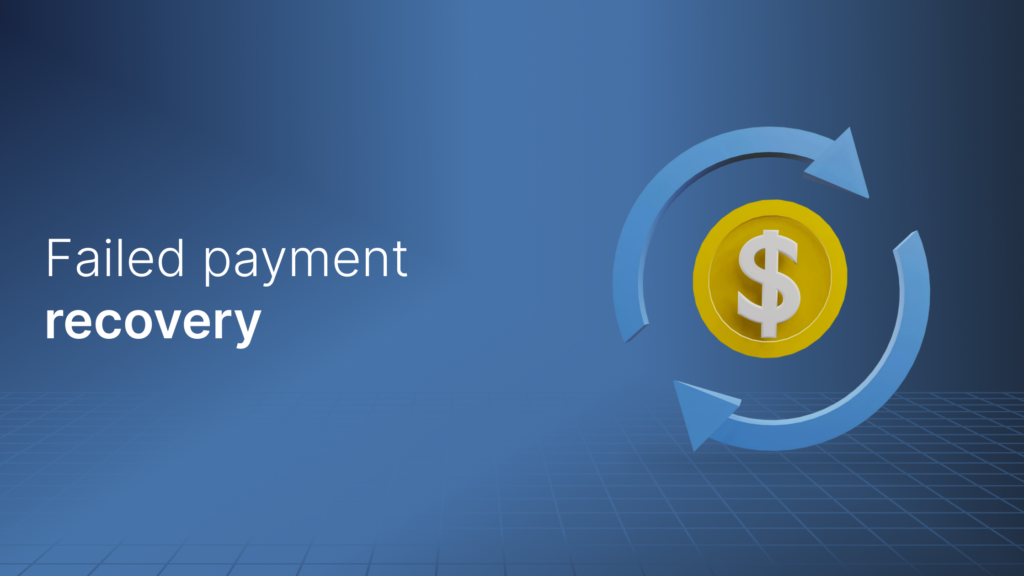
SQL can help analysts connect order records with payment outcomes.
This allows them to identify completed purchases associated with failed or incomplete payments.
More importantly, analysts can segment these failures by customer, geography, payment method, product, transaction value, and time period.
Suppose analysis reveals that payment failures are significantly higher for one payment provider.
That discovery creates a business question.
Is the payment provider experiencing technical issues?
Are customers abandoning the process after failed attempts?
Would an alternative payment method recover some of the lost revenue?
The SQL query itself does not solve the problem.
It creates the evidence needed to solve it.
This distinction is fundamental to effective analytics.
Revenue Leakage Through Subscription Billing
Subscription businesses face a particularly interesting revenue leakage challenge because recurring billing creates thousands or millions of repeated transactions.
A customer may upgrade a subscription but continue being charged at the old rate. Another customer may downgrade but remain on the higher plan. A promotional rate may fail to expire. A cancelled account may continue receiving services without being billed correctly.
Because subscriptions operate continuously, even small billing discrepancies can accumulate over time.
SQL is extremely useful in this environment because analysts can compare subscription states against billing records.
For example, an analyst can investigate whether the current subscription plan matches the amount being charged. They can examine whether customers who upgraded are being billed according to their new plan. They can identify active subscriptions without recent invoices and investigate accounts where service usage appears inconsistent with billing activity.
This analysis becomes even more powerful when combined with customer lifecycle data.
An analyst may discover that revenue leakage is concentrated among customers who recently changed plans. That finding points toward a potential weakness in the upgrade or downgrade process.
Consequently, SQL does more than identify financial discrepancies.
It reveals where operational processes are failing.
Using SQL to Detect Revenue Leakage Patterns
Finding individual leakage events is useful, but finding patterns is far more valuable.
Suppose an organization discovers 500 undercharged transactions. The immediate response might be to correct those transactions.
However, the more important question is why those transactions occurred.
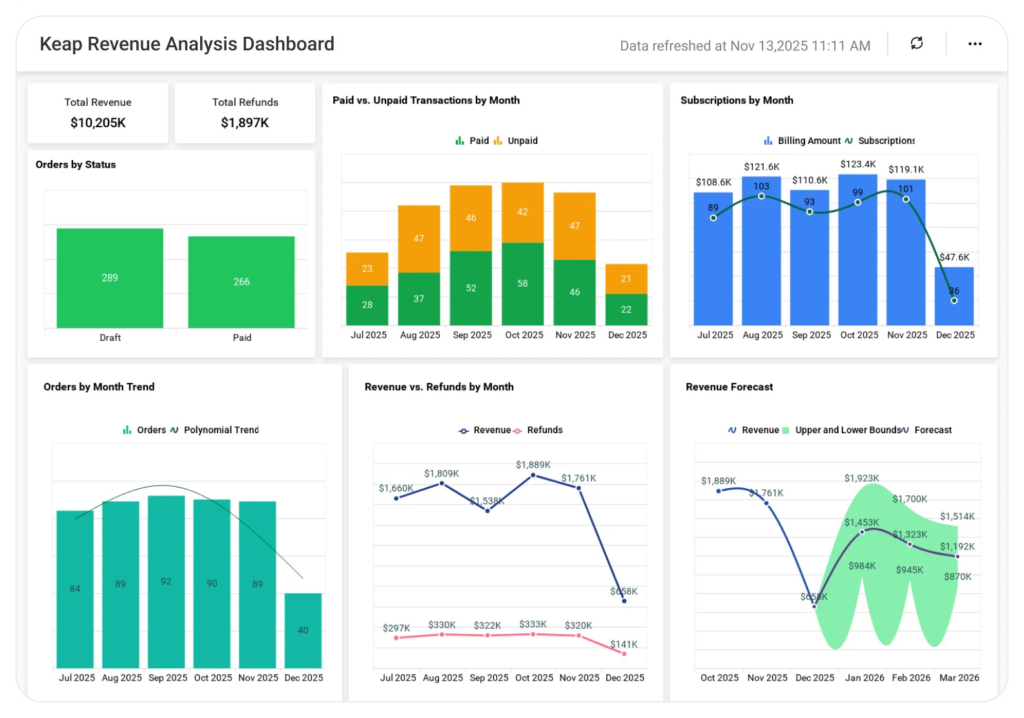
Were they concentrated among a specific sales team?
Did they occur after a system update?
Were they associated with one product?
Did they happen during a particular time period?
Were they processed through one sales channel?
Did one customer segment experience the issue more frequently?
SQL enables analysts to aggregate suspected leakage events across different dimensions.
This is where GROUP BY becomes particularly powerful.
By grouping leakage amounts by product, region, salesperson, customer segment, payment method, or month, analysts can determine where the greatest financial exposure exists.
For example, the total leakage might be $250,000, but 70 percent may come from only one sales channel.
That changes the business response.
Instead of launching a company-wide investigation, management can focus resources on the area with the highest financial risk.
This is the difference between descriptive analytics and decision-oriented analytics.
The objective is not simply knowing how much money is being lost.
It is knowing where, why, and how to stop it.
Building a Revenue Leakage Investigation Framework
A strong revenue leakage analysis begins with business understanding.
Before writing SQL, analysts need to understand how the organization generates revenue. They should understand the journey from customer acquisition through purchase, fulfillment, invoicing, payment, refund, and recognition.
This process creates the foundation for identifying potential gaps.
Once the revenue lifecycle is understood, analysts can map the relevant data sources to each stage. Transaction data can be connected to product information, pricing rules, customer records, billing information, payment records, and operational events.
The next stage involves defining expected outcomes.
What should have happened if every process worked correctly?
That question is crucial.
Without a clearly defined expected state, analysts cannot reliably identify deviations.
After establishing expected behavior, SQL can be used to compare actual outcomes against those expectations.
Potential discrepancies can then be quantified, categorized, and investigated.
However, the analysis should not end with a list of suspicious transactions.
The final objective is business action.
Management needs to know the financial impact, the root cause, the affected process, and the corrective action required.
This is where the Business Analyst’s role becomes especially important.
Turning Revenue Leakage Insights Into Business Action
An analyst who discovers $500,000 in potential leakage has created valuable information.
An analyst who explains how to recover that $500,000 creates business value.
This distinction is essential.
Revenue leakage analysis should ultimately lead to intervention.
Perhaps pricing systems need to be synchronized.
Perhaps discount approvals require stronger controls.
Perhaps billing processes need automation.
Perhaps failed payments require better recovery workflows.
Perhaps operational and financial systems need improved integration.
The appropriate response depends on the root cause.
Therefore, analysts should avoid presenting leakage findings as accusations. Instead, they should frame the results as opportunities to improve business processes.
For example, instead of saying that the sales department caused $200,000 in revenue leakage, the analyst might explain that transactions processed through a particular pricing workflow showed a recurring difference between approved and applied prices.
This language shifts the conversation from blame toward process improvement.
That approach is especially important when analytics affects multiple departments.
Data should help organizations solve problems, not simply identify people to blame.
The Role of Data Quality in Revenue Leakage
Revenue leakage analysis is only as reliable as the data behind it.
This may seem obvious, yet it is one of the most important considerations in financial analytics.
Suppose transaction prices are missing for five percent of records. Suppose customer identifiers are inconsistent between billing and CRM systems. Suppose refund dates are incorrect. Suppose invoice records are duplicated.
SQL may still produce a result.
That result may even look convincing.
However, it could be completely misleading.
Therefore, analysts must validate the underlying data before calculating leakage.
This is another reason why data cleaning and data quality remain central to business analytics.
Revenue analysis requires trustworthy relationships between systems.
If those relationships are broken, analysts may incorrectly classify legitimate transactions as leakage or fail to detect genuine problems.
Consequently, data validation should be treated as part of revenue protection rather than as a separate technical activity.
The better the organization’s data quality, the more accurately it can identify financial discrepancies.
Measuring the Business Impact of Revenue Leakage
Not every discrepancy deserves the same level of attention.
An organization may discover thousands of small differences, but investigating every one manually may cost more than the revenue recovered.
Therefore, analysts should quantify both financial value and business significance.
A $5 discrepancy repeated across one million transactions could be more important than a single $10,000 anomaly.
Similarly, a small leakage event that indicates a growing systemic problem may deserve immediate attention because its future impact could become substantial.
This is where analytical prioritization becomes important.
Instead of simply reporting the number of anomalies, analysts should estimate potential annualized impact, identify recurring patterns, and determine which issues are most likely to produce meaningful financial improvement.
This transforms revenue leakage analysis from a technical investigation into a strategic financial initiative.
The question changes from “How many errors did we find?” to “How much revenue can the organization realistically recover or protect?”
That is the question executives care about.
How AI Can Strengthen SQL-Based Revenue Leakage Detection
Artificial intelligence is increasingly expanding the capabilities of revenue analytics.
Traditional SQL analysis typically relies on predefined rules. Analysts identify expected conditions and write queries to detect deviations.
AI can extend this approach by identifying unusual patterns that may not have been explicitly defined.
For example, an AI-assisted analytics system could learn typical transaction behavior and flag transactions that differ significantly from historical patterns.
This could include unusual discount combinations, unexpected refund behavior, abnormal pricing, suspicious payment patterns, or sudden changes in customer billing activity.
However, AI should not replace SQL-based validation.
Instead, the two approaches can complement each other.
SQL provides transparent, rule-based analysis.
AI provides pattern recognition and anomaly detection.
Together, they can create a stronger revenue protection framework.
Nevertheless, human oversight remains essential. An unusual transaction is not necessarily an incorrect transaction. Business context must still determine whether an anomaly represents genuine leakage.
This is another example of why the future of analytics will increasingly involve collaboration between human judgment, SQL, Business Intelligence, and artificial intelligence.
The Long-Term Value of Revenue Leakage Analytics
The most valuable outcome of revenue leakage analysis is not recovering money once.
It is preventing the same leakage from occurring repeatedly.
This requires organizations to move from reactive investigation toward continuous monitoring.
Once SQL identifies a recurring leakage pattern, the underlying rule can potentially be transformed into an automated control.
For example, if transactions consistently use prices below approved thresholds, the system can automatically flag future transactions.
If active subscriptions exist without corresponding billing records, an automated alert can be generated.
If refunds exceed defined thresholds, the transaction can be routed for review.
In this way, analytics evolves from historical reporting into proactive revenue protection.
The organization moves from discovering losses after they happen to preventing losses before they accumulate.
This represents a much more mature approach to Business Intelligence.
SQL as a Revenue Protection Tool
Revenue leakage is one of the most overlooked sources of financial opportunity in modern businesses. Organizations often focus heavily on increasing sales while failing to examine whether the revenue they generate is being fully captured, billed, collected, and retained.
SQL provides analysts with a powerful way to investigate this problem.
By connecting transactional data with pricing, customer, contract, billing, payment, subscription, refund, and operational information, analysts can uncover discrepancies that would otherwise remain hidden.
However, the real value does not come from writing complicated SQL queries.
It comes from asking the right business questions.
A technically perfect query can identify an incorrect price, but analytical thinking determines whether that price is actually incorrect. SQL can reveal a refund pattern, but business understanding determines whether the pattern indicates a process failure. A query can calculate the total amount of potential leakage, but decision-making determines how the organization should respond.
Therefore, revenue leakage analysis represents an excellent example of why modern analytics must combine technical expertise with business understanding.
The strongest analysts do not simply search databases for unusual numbers.
They investigate how money moves through an organization.
They understand how customers purchase, how products are priced, how services are delivered, how invoices are generated, how payments are collected, and where those processes can break down.
Most importantly, they connect analytical findings to measurable business outcomes.
In an environment where margins are increasingly important and competition continues to intensify, protecting existing revenue can be just as valuable as generating new revenue.
SQL gives analysts the ability to see where revenue may be disappearing.
Business analysis provides the framework for understanding why.
Together, they transform data into a powerful mechanism for protecting one of the most important assets any organization has: its revenue.