Why Great Business Analysts Do More Than Write Queries
Structured Query Language, more commonly known as SQL, has remained one of the most valuable skills in Business Analysis, Business Intelligence, and Data Analytics for decades. While technologies have evolved, programming languages have emerged, and artificial intelligence has transformed how data is analyzed, SQL continues to sit at the heart of modern decision-making. Nearly every organization that stores structured data relies on SQL in one form or another. Whether the business operates in finance, healthcare, retail, telecommunications, logistics, education, or manufacturing, SQL remains the language that connects analysts to the information that drives business performance.

Because SQL is so widely used, many professionals measure their expertise by the complexity of the queries they can write. They invest time learning joins, aggregations, subqueries, Common Table Expressions, window functions, and advanced optimization techniques. They memorize syntax, practice interview questions, and complete online exercises designed to improve technical proficiency. These efforts are certainly valuable because technical competence forms the foundation of every successful analyst’s career.
However, technical knowledge alone rarely separates exceptional analysts from average ones.
In reality, there is a profound difference between knowing SQL and thinking in SQL. This distinction often determines whether an analyst simply delivers reports or consistently influences business decisions.
Knowing SQL means understanding the language. It means recognizing syntax, writing queries that execute successfully, joining tables correctly, filtering datasets, grouping records, and retrieving information from databases. These are essential capabilities, and without them, analysts cannot perform their responsibilities effectively.
Thinking in SQL, however, represents something entirely different.
It is a mindset rather than a technical skill. It is the ability to approach business problems through the logic of data relationships, analytical reasoning, and structured investigation. Analysts who think in SQL do not immediately begin writing code when they receive a business request. Instead, they begin by understanding the business problem, visualizing how information is connected, identifying which data elements matter most, and determining the most logical pathway to answer the underlying question.
This difference may appear subtle, yet it fundamentally changes how analysts approach their work.
One analyst may receive a request to calculate monthly customer retention and immediately begin writing queries. Another analyst receives the same request but first asks what the business hopes to learn from retention, how customers are currently defined, whether inactive accounts should be included, what period qualifies as retention, and how the resulting insight will influence strategic decisions.
Both analysts know SQL.
Only one is thinking in SQL.
As organizations become increasingly dependent on data-driven decision-making, this distinction grows more important every year. Modern businesses no longer struggle to collect information. Instead, they struggle to transform information into meaningful action. Dashboards, reports, and automated analytics systems continue generating enormous volumes of data every day. Yet despite this abundance of information, leaders frequently remain uncertain about what decisions they should make.
This challenge has elevated the role of business analysts. They are no longer expected merely to retrieve data. They are expected to interpret business questions, uncover hidden patterns, validate assumptions, and guide decision-makers toward confident action.
Accomplishing this requires more than technical SQL expertise.
It requires analytical thinking.
It requires curiosity.
It requires business understanding.
Most importantly, it requires learning to think in SQL.
Why Learning SQL Is Easier Than Learning Analytical Thinking
Many aspiring analysts believe SQL is difficult because of its syntax. Initially, this perception is understandable. SQL introduces concepts such as joins, nested queries, grouping operations, window functions, conditional logic, and aggregation techniques that appear unfamiliar to beginners. During the early stages of learning, much attention naturally focuses on remembering keywords and understanding how different clauses interact.
Over time, however, something interesting happens.
The syntax becomes increasingly familiar.

Most analysts eventually become comfortable writing SELECT statements, filtering records with WHERE clauses, grouping data using GROUP BY, combining tables through joins, and sorting results according to business requirements.
At this stage, many believe they have mastered SQL.
Unfortunately, this is often where genuine learning begins rather than ends.
Writing syntactically correct SQL does not necessarily produce meaningful analysis.
Consider two analysts asked to investigate declining customer satisfaction.
The first analyst immediately retrieves customer survey scores, calculates monthly averages, and presents visual trends.
Technically, the work is correct.
The query executes successfully.
The calculations are accurate.
The dashboard looks professional.
Yet leadership still asks an important question.
Why did customer satisfaction decline?
The report cannot answer.
The second analyst approaches the same request differently.
Before opening the database, they think carefully about the business problem.
Could declining satisfaction relate to delivery delays?
Did response times increase?
Were product returns higher than normal?
Did pricing changes influence customer perception?
Did support ticket resolution times deteriorate?
Which customer segments experienced the greatest decline?
How does satisfaction compare with purchasing behavior?
Notice what changed.
The analyst did not begin with SQL.
They began with business reasoning.
Only after developing hypotheses did SQL become the mechanism for testing those ideas.
This represents the essence of thinking in SQL.
SQL becomes the language used to investigate questions rather than the objective itself.
Consequently, analysts who think this way produce deeper insights because every query serves a purpose beyond retrieving data.
Instead of asking, “How do I write this query?”
They ask, “What business truth am I trying to discover?”
That single shift transforms technical work into strategic analysis.
SQL as a Language of Relationships
Perhaps the most important difference between knowing SQL and thinking in SQL lies in understanding relationships.
Databases are not simply collections of independent tables.
They represent interconnected business processes.
Customers place orders.
Orders contain products.
Products belong to categories.
Suppliers deliver inventory.
Employees process transactions.
Payments support revenue.
Returns reduce profitability.
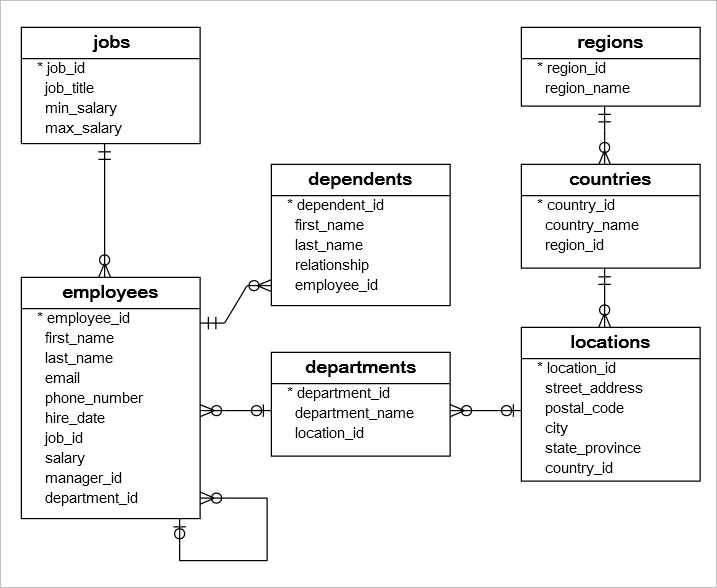
Marketing campaigns generate customer interactions.
Every table exists because some real-world business relationship exists.
Analysts who merely know SQL often think in terms of tables.
Analysts who think in SQL think in terms of business relationships.
This distinction dramatically changes how problems are approached.
Imagine a manager asking why revenue declined despite increased website traffic.
Someone focused only on SQL might retrieve website visits and revenue figures separately.
Someone thinking in SQL immediately begins mapping relationships.
How many visitors became customers?
Did conversion rates change?
Were returning customers purchasing less frequently?
Did average transaction values decrease?
Were abandoned shopping carts increasing?
Did mobile users behave differently from desktop users?
Each of these questions reflects relational thinking.
The analyst understands that business performance rarely depends upon isolated metrics.
Instead, performance emerges from interactions between customers, products, channels, time periods, operational processes, and market conditions.
SQL simply provides the tools necessary to explore these relationships.
This perspective allows analysts to move beyond reporting toward explanation.
Instead of showing executives what happened, they explain why it happened.
That ability significantly increases an analyst’s value within any organization.
Why Business Context Changes Everything
Another defining characteristic of SQL thinking is the ability to interpret technical work through business context.
Many datasets contain similar structures.
Sales databases contain customers, products, transactions, and revenue.
Healthcare systems contain patients, appointments, treatments, and providers.
Educational institutions store students, courses, instructors, and assessments.
Although database structures differ, analytical thinking remains remarkably consistent.
The strongest analysts recognize that SQL exists to answer business questions rather than database questions.
Consequently, they avoid becoming distracted by technical complexity.
Their primary concern is understanding how organizations operate.
Every query becomes part of a larger business conversation.
When stakeholders request reports, experienced analysts rarely begin by writing code.
Instead, they seek clarification.
What decision will this report support?
How will success be measured?
What action will follow if the numbers change?
Which stakeholders depend upon these insights?
Without this context, even technically perfect SQL may solve the wrong problem.
Business context provides direction.

SQL provides execution.
Together they create meaningful analysis.
Separated from one another, both become significantly less valuable.
From Query Writing to Problem Solving
One of the most significant milestones in an analyst’s career occurs when SQL stops feeling like a programming language and starts becoming a method of thinking. This transition is not marked by learning a new command or mastering a more advanced function. Instead, it is marked by a change in perspective.
Analysts who are still developing their SQL skills often approach every assignment from a technical angle. Their first instinct is to think about syntax. They ask themselves which tables they need to join, what filtering conditions should be applied, or whether a subquery or Common Table Expression would be more appropriate. Their attention naturally gravitates toward the mechanics of writing code.

While there is nothing inherently wrong with this approach, it limits the analyst’s ability to understand the larger business problem.
Experienced analysts approach the same assignment very differently.
Rather than focusing immediately on the database, they begin by examining the decision that needs to be made. They recognize that every request for data exists because someone within the organization is trying to reduce uncertainty. A sales manager may be questioning declining revenue. A marketing director may be investigating campaign performance. A finance executive may be evaluating profitability. An operations manager may be searching for production bottlenecks.
In each case, SQL is not the destination.
It is simply the vehicle used to reach the answer.
This shift fundamentally changes how analysts think.
Instead of asking how to retrieve data, they ask why the data matters. Instead of concentrating solely on technical execution, they concentrate on solving business problems.
Consequently, every query becomes intentional. Every join has a purpose. Every filter answers a specific question. Every aggregation contributes to a business conclusion.
The result is analysis that is significantly more valuable because it is directly connected to organizational objectives.
Thinking Before Typing
One habit consistently separates highly effective analysts from those who remain focused primarily on technical execution.
They think before they type.
This may sound obvious, yet it is surprisingly uncommon.
Many analysts begin writing SQL almost immediately after receiving a request. They believe momentum comes from opening the query editor as quickly as possible. Unfortunately, this often leads to repeated revisions, unnecessary complexity, and inefficient problem solving.
Analysts who think in SQL resist this temptation.
Before writing a single line of code, they construct a mental model of the business process they are about to investigate.
They imagine how information flows through the organization.
They identify the entities involved.
They visualize relationships between customers, products, transactions, employees, suppliers, locations, or time periods.
More importantly, they ask themselves what evidence would either confirm or disprove the assumptions behind the business question.
This deliberate planning dramatically improves analytical quality.
Rather than experimenting with random queries until something useful appears, they execute a structured investigation.
The database becomes less intimidating because the analyst already knows what they expect to discover.
This approach also produces cleaner SQL.
Instead of writing unnecessarily complicated queries, experienced analysts often create remarkably simple solutions because their thinking is organized before coding begins.
In many cases, clarity of thought reduces complexity of implementation.
Every Business Question Has a Data Story
Organizations rarely ask analysts for information simply because they are curious.
Behind every request lies a business story waiting to be uncovered.
Consider a situation where management reports that customer acquisition costs have increased significantly during the previous six months.
An analyst who knows SQL may immediately calculate acquisition costs by campaign, marketing channel, and customer segment.
The numbers are accurate.
The report is complete.
Yet leadership remains uncertain about the underlying cause.
A decision-oriented analyst approaches the same situation differently.
Rather than viewing acquisition cost as an isolated metric, they recognize it as the outcome of several interconnected business activities.
They begin exploring customer behavior.
Has website conversion declined?
Have advertising costs increased?
Has competition intensified?
Are lower-quality leads entering the sales pipeline?
Has customer lifetime value changed alongside acquisition costs?
Each additional question expands the investigation.
Eventually, the analyst constructs a complete narrative explaining not only what happened but why it happened.
This illustrates one of the defining characteristics of SQL thinking.
Business questions rarely require isolated answers.
They require connected explanations.
Analysts who think in SQL naturally search for relationships between metrics instead of treating each measurement independently.
Their objective is understanding rather than calculation.
That distinction transforms ordinary reporting into strategic analysis.
SQL Thinking Encourages Curiosity
Curiosity is perhaps the most underestimated skill in modern analytics.
Technical competence enables analysts to retrieve information.
Curiosity enables them to discover insights.
Without curiosity, SQL becomes repetitive.
Analysts answer exactly the questions they are asked without exploring whether deeper questions exist.
Curious analysts behave differently.
Whenever they retrieve unexpected results, they investigate further.
Whenever trends appear unusual, they explore contributing factors.
Whenever stakeholders present assumptions, they validate those assumptions with evidence.
This habit often leads to discoveries that were never included in the original request.
For example, an analyst investigating declining online sales may unexpectedly discover that mobile customers are abandoning purchases significantly more often than desktop users.
Initially, the assignment focused on revenue.
However, curiosity redirected the investigation toward customer experience.
The resulting recommendations become significantly more valuable because they address root causes rather than symptoms.
Organizations consistently reward analysts who uncover hidden opportunities because these discoveries influence strategic decisions.
Curiosity therefore becomes a competitive advantage.
SQL simply provides the mechanism through which curiosity is tested.
Why SQL Thinking Produces Better Business Decisions
Every business decision depends upon evidence.
However, evidence alone is rarely sufficient.
Decision-makers also require interpretation.
This is where SQL thinking creates enormous value.
Imagine an executive reviewing quarterly revenue.
The numbers indicate that overall sales increased by eight percent.
On the surface, this appears positive.
A reporting-focused analyst delivers the figures and considers the assignment complete.
An analyst who thinks in SQL continues asking questions.
Which customer segments contributed most to growth?
Did existing customers purchase more frequently?
Were higher revenues driven primarily by price increases?
Did profitability improve at the same pace?
Were certain regions underperforming despite overall growth?
Has customer retention improved or declined?
Gradually, a richer picture begins to emerge.
Perhaps overall revenue increased, but profitability declined because discounting became more aggressive.
Perhaps growth came entirely from one geographic region while several others weakened.
Perhaps customer acquisition improved while repeat purchases deteriorated.
Each discovery changes the strategic conversation.
Instead of celebrating revenue growth, leadership begins discussing sustainable growth.
Instead of focusing exclusively on sales, they evaluate customer loyalty, operational efficiency, pricing strategy, and long-term profitability.
This demonstrates the true purpose of SQL thinking.
Its objective is not retrieving information.
Its objective is improving decisions.
The Analyst as an Investigator
Many experienced professionals compare business analysis to detective work.
This comparison is surprisingly accurate.
Detectives rarely begin investigations by assuming they already know the answer.
Instead, they gather evidence, test theories, eliminate possibilities, and gradually construct explanations supported by facts.
Analysts who think in SQL adopt a remarkably similar approach.
Every business problem becomes an investigation.
Unexpected revenue changes become clues.
Customer complaints become evidence.
Operational delays become indicators.
Marketing performance becomes a hypothesis waiting to be tested.
Rather than accepting surface-level explanations, analysts investigate deeper relationships.
They recognize that symptoms often conceal more important underlying causes.
For example, declining employee productivity may initially appear to reflect workforce performance.
Further investigation might reveal outdated software systems, inefficient workflows, insufficient training, or unrealistic operational targets.
Without structured investigation, these underlying issues remain hidden.
SQL thinking encourages analysts to pursue evidence systematically until the complete story emerges.
This investigative mindset dramatically increases analytical value because organizations rarely need more data.
They need greater understanding.