Artificial intelligence is rapidly changing the way organizations work with data. Tasks that once required hours of manual analysis can now be completed within minutes. AI-powered analytics tools can summarize datasets, identify patterns, generate SQL queries, explain trends, create forecasts, and produce recommendations that appear remarkably sophisticated. For Business Analysts and Data Analysts, this creates enormous opportunities to work faster and explore questions that might previously have required significant technical effort.
However, speed does not automatically mean accuracy.

An AI system can generate an insight that sounds convincing while being incomplete, misleading, or completely wrong. It may identify a correlation and present it as a cause. It may interpret a temporary anomaly as a long-term trend. It may use an incorrect assumption about the business. It may analyze incomplete data without recognizing the missing information. In some cases, the mathematics may be correct while the conclusion is still inappropriate for the business decision being considered.
Therefore, as organizations increasingly incorporate artificial intelligence into analytics workflows, one skill is becoming especially important: the ability to validate AI-generated insights.
This does not mean analysts should distrust everything produced by AI. Instead, it means they should understand that AI-generated analysis is a starting point rather than an unquestionable conclusion. The analyst’s responsibility is to examine the evidence, verify the methodology, challenge the assumptions, understand the business context, and determine whether the insight is strong enough to support a decision.
This is where the modern analyst’s role becomes even more valuable.
Artificial intelligence can process information at remarkable speed, but business decisions require judgment. AI can identify patterns, but analysts must determine whether those patterns are meaningful. AI can produce explanations, but analysts must establish whether the explanations are supported by evidence. AI can recommend an action, but analysts must evaluate the risks and consequences of taking that action.
Consequently, the future of analytics is not simply about humans versus AI.
It is about humans using AI while maintaining analytical discipline.
What Is an AI-Generated Insight?
Before discussing validation, it is important to understand what an AI-generated insight actually represents.
An insight is more than a number or observation. It is an interpretation of information that provides some understanding of a business situation and potentially supports a decision.
For example, a dashboard might show that sales declined by 15 percent during the previous quarter. That is an observation.
An AI system might then state that the decline occurred because customer demand weakened. That is an interpretation.
The interpretation may be correct, but it is not automatically proven simply because an AI system generated it.
Perhaps the decline was caused by inventory shortages. Perhaps a major customer left. Perhaps the organization increased its prices. Perhaps a sales channel experienced technical problems. Perhaps the dataset excluded a large transaction category.
Therefore, the analyst must distinguish between what the data directly demonstrates and what the AI system has inferred.
This distinction is fundamental to responsible analytics.
AI-generated insights often combine statistical patterns, contextual assumptions, and natural-language reasoning. The output can therefore sound more certain than the underlying evidence actually allows.
An analyst should consequently ask a simple question whenever AI presents a conclusion:
What evidence supports this claim?
That question is the beginning of validation.
Why AI-Generated Insights Need Validation
AI systems are designed to generate useful outputs based on patterns in data and information. They are not inherently designed to guarantee that every business conclusion is correct.
This distinction matters because analytical decisions often involve consequences.
An incorrect recommendation might cause a company to reduce its marketing budget, discontinue a product, change pricing, alter staffing levels, or target the wrong customer segment.

The cost of an incorrect insight can therefore be much greater than the cost of an incorrect sentence generated by an ordinary AI assistant.
Furthermore, AI systems can sometimes produce what analysts commonly describe as hallucinations. In an analytical context, this can include unsupported explanations, invented relationships, incorrect calculations, misinterpreted variables, or overly confident conclusions.
However, the problem is not always an obvious error.
Some of the most dangerous AI-generated insights are technically plausible.
An AI system may correctly calculate that customers who use a particular feature have higher retention. Yet that does not prove that the feature causes retention. Customers who are already highly engaged may simply be more likely to use the feature.
The statistical relationship can therefore be real while the proposed explanation is wrong.
This is why validation must examine both the numbers and the reasoning.
Start by Validating the Business Question
One of the first responsibilities of an analyst is to determine whether the AI is answering the right question.
This may sound basic, but it is one of the most important steps.
AI systems are highly responsive to prompts. If the question is poorly defined, the system may produce an excellent answer to the wrong problem.
Suppose a manager asks an AI tool to identify why revenue is declining.
The system analyzes recent sales data and reports that customer purchases have decreased.
That answer may be statistically correct, but it does not necessarily solve the business problem.
The manager may actually need to understand whether the decline is caused by customer churn, pricing changes, product availability, regional performance, sales productivity, or market conditions.
Therefore, the analyst should clarify the decision behind the question.
What decision is the organization trying to make?
What problem triggered the analysis?
What would change if the insight were true?
What evidence is necessary to support the decision?
By establishing the business question first, analysts can determine whether the AI-generated insight is relevant.
An accurate answer to an irrelevant question still produces little business value.
Validate the Source Data
The quality of an AI-generated insight depends heavily on the quality of the data used to produce it.
This principle has not changed because AI has entered the analytics process.
If the underlying dataset contains missing values, duplicates, incorrect records, inconsistent definitions, outdated information, or sampling problems, the AI system may generate an insight from a flawed foundation.
In fact, AI can sometimes make poor data appear more convincing because it can present the resulting analysis in polished language.
Therefore, analysts should investigate where the data came from before accepting the conclusion.
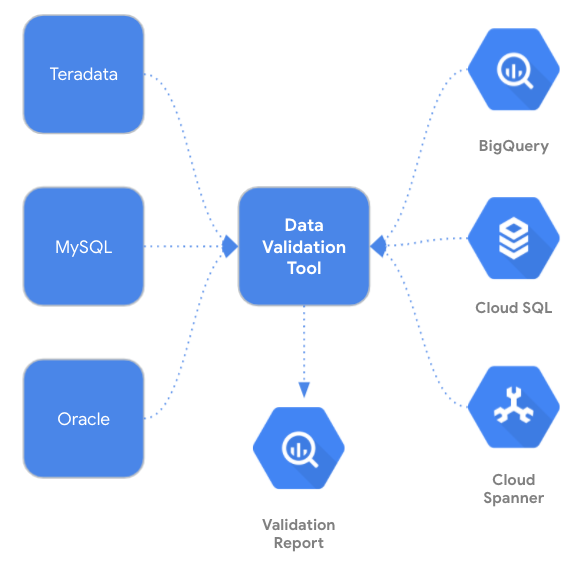
They should understand which systems contributed the data, when the data was collected, how it was transformed, and whether important records were excluded.
Suppose an AI system reports that customer churn has increased significantly.
Before accepting the conclusion, the analyst should determine how churn was defined and whether the dataset contains all relevant customer activity.
Perhaps the billing system contains cancellations while the CRM system contains customer status. If these systems are not synchronized, the calculated churn rate may be inaccurate.
Similarly, an apparent decline in sales could be caused by missing transactions rather than genuine business deterioration.
Data validation therefore comes before insight validation.
The analyst must establish whether the evidence itself is trustworthy.
Verify the Definitions
Business analytics frequently depends on definitions.
Terms such as revenue, customer, churn, conversion, active user, profit, retention, and engagement can mean different things in different organizations.
AI systems may not automatically understand the organization’s official definitions unless those definitions are explicitly provided.
This creates a significant validation risk.

Imagine that the finance department defines revenue as recognized revenue while the sales team defines revenue as booked sales.
An AI system analyzing a sales dataset may use one interpretation while management expects another.
The resulting insight could therefore be mathematically correct but business-inaccurate.
Consequently, analysts should verify the definitions of important metrics before accepting AI-generated conclusions.
The analyst should know exactly what the metric represents, how it is calculated, which records are included, and which records are excluded.
This becomes especially important when AI is working across multiple datasets.
A customer count from the CRM system may not match the customer count from the billing system.
An order count from an e-commerce database may not match the number of fulfilled orders.
These differences may be legitimate, but they must be understood.
Without consistent definitions, AI-generated insights can easily create false narratives.
Recalculate the Numbers
One of the simplest and most effective validation techniques is independent recalculation.
If an AI system provides a numerical result, analysts should verify the calculation using another method whenever the decision is important.
For example, if AI reports a 22 percent increase in customer churn, the analyst can independently calculate the churn rate using SQL, Python, Excel, or the organization’s established analytics platform.
If both methods produce the same result, confidence increases.
If they differ, the analyst has discovered an issue that needs investigation.
Independent calculation is particularly valuable when AI has generated complex formulas or SQL queries.
The analyst should not assume that a query is correct simply because it executes successfully.
A SQL query can run without errors while producing incorrect business results.
For instance, an inappropriate join can duplicate transactions and inflate revenue.
A missing filter can include irrelevant records.
An incorrect date condition can distort period comparisons.
An aggregation performed at the wrong level of granularity can produce misleading results.
Therefore, successful execution is not the same as analytical correctness.
The analyst must validate the logic behind the calculation.
Check the Grain of the Data
Data grain is another important consideration when validating AI-generated insights.
Grain refers to what one row in a dataset represents.
One table may contain one row per customer. Another may contain one row per transaction. Another may contain one row per product per day.
If these datasets are combined incorrectly, calculations can become distorted.
Suppose an AI system joins a customer table directly to a transaction table and then calculates customer revenue. If additional one-to-many relationships are introduced during the analysis, the same transactions may be counted multiple times.
The resulting revenue figure could be significantly overstated.
The query might still look reasonable.
The numbers might even appear plausible.
This is why experienced analysts pay attention to data grain.
They understand that every analytical result depends on the structure of the data being analyzed.
When validating AI-generated insights, analysts should therefore ask what each row represents and whether the relationships between datasets preserve the intended level of detail.
This is an excellent example of where traditional analytical knowledge remains extremely valuable in an AI-powered environment.
Distinguish Correlation From Causation
Perhaps one of the most important validation skills is distinguishing correlation from causation.
AI systems are often very good at identifying relationships between variables.
However, a relationship does not automatically prove that one variable causes another.
Imagine an AI analysis discovers that customers who receive more marketing emails have higher purchase rates.
It might conclude that sending more emails increases purchases.
But there could be another explanation.
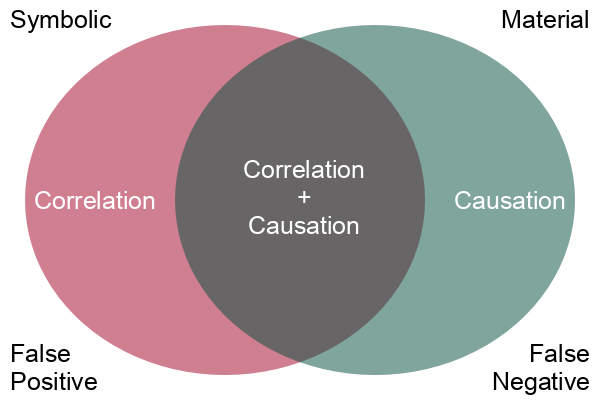
Customers who are already more interested in the company may both open more emails and purchase more products.
In that situation, engagement is influencing both variables.
The relationship is real, but the proposed causal explanation is incomplete.
Analysts must therefore challenge causal claims.
They should consider alternative explanations, confounding variables, selection bias, seasonality, and reverse causality.
When possible, controlled experiments or appropriate statistical methods can provide stronger evidence for causal relationships.
This is particularly important when AI-generated recommendations could lead to major business changes.
Compare AI Insights With Historical Patterns
Historical context can help determine whether an AI-generated insight represents a meaningful change or simply normal variation.
Suppose AI reports that website conversions decreased by 8 percent during the past week.
Without context, this may appear concerning.
However, if conversions typically fluctuate between 5 and 12 percent every week, the change may be completely normal.
Conversely, if conversion rates have remained stable for twelve months and suddenly fall by 8 percent, the event may deserve immediate investigation.

Therefore, analysts should compare AI-generated observations against historical baselines.
Trend analysis, seasonality, moving averages, and year-over-year comparisons can provide useful context.
This helps analysts distinguish genuine business signals from normal fluctuations.
AI can identify changes quickly.
The analyst determines whether those changes matter.
Investigate Anomalies Instead of Accepting Them
AI-powered analytics tools are increasingly capable of detecting anomalies.
They can identify unusual sales patterns, unexpected customer behavior, sudden changes in traffic, or unusual transaction activity.
These capabilities can be extremely valuable.
However, an anomaly is not automatically a problem.
A sudden increase in sales could represent a data error, but it could also be the result of a successful marketing campaign.
A sharp decline in transactions could indicate a technical failure, but it might also reflect a seasonal holiday.
Therefore, analysts should investigate anomalies within their business context.
They should compare the event against operational activities, marketing campaigns, pricing changes, product launches, system incidents, and external factors.
This prevents organizations from reacting unnecessarily to normal or explainable variation.
At the same time, it helps ensure that genuinely important anomalies are not dismissed.
Test the Insight Against Alternative Explanations
Strong analytical validation involves trying to disprove the insight.
This is an important mindset shift.
Instead of asking, “How can I prove this AI-generated conclusion is correct?” analysts should ask, “What evidence would show that this conclusion is wrong?”
Suppose AI concludes that customer churn increased because customer satisfaction declined.
The analyst should investigate whether churn also increased among customers whose satisfaction scores remained stable.
If it did, the proposed explanation may be incomplete.
Similarly, the analyst might examine whether churn increased in specific customer segments, regions, products, or subscription plans.
Alternative explanations provide a stronger analytical challenge.
If the insight survives these challenges, confidence increases.
This process is closely related to hypothesis testing.
The AI generates a potential explanation.
The analyst tests it against evidence.
The result may support the original conclusion, modify it, or reject it entirely.
That is how AI becomes part of a disciplined analytical workflow rather than an authority that replaces analytical judgment.
Validate the Time Period
Time is another major source of misleading insights.
AI-generated analysis may compare two periods without considering differences in duration, seasonality, holidays, product launches, economic conditions, or business cycles.
For example, comparing December sales with November sales may produce a dramatic change because holiday shopping patterns differ.
Similarly, comparing a partial month with a complete month can create an artificial decline.
Therefore, analysts should examine the time periods used in the analysis.
Are they comparable?
Do they contain the same number of business days?
Are there seasonal patterns?
Were there unusual events?
Did the organization change its pricing or product strategy?
These questions help prevent false conclusions.
Time-series analysis is particularly valuable here because it allows analysts to place AI-generated observations within a broader historical context.
Examine the Sample Size
Another important validation factor is sample size.
An AI system may identify a pattern in a small dataset and present it as an important finding.
However, a relationship observed among 20 customers should generally be treated differently from a relationship observed among two million customers.
Small samples can produce unstable results.
A few unusual observations can disproportionately influence the conclusion.
Therefore, analysts should determine how much data supports the insight.
They should consider whether the sample is large enough for the analytical method being used and whether the sample accurately represents the population being studied.
This is especially important when AI generates customer segmentation, behavioral insights, or predictive recommendations.
The question should always be:
How much evidence supports this conclusion?
Check for Bias
AI-generated insights can also reflect bias within the data.
Historical datasets often contain patterns created by past decisions, operational practices, or social and economic conditions.
If those patterns are not examined carefully, AI may reproduce or amplify them.
For example, an AI system analyzing employee performance may conclude that employees in one location consistently perform better.
However, perhaps those employees have access to better tools, more experienced managers, or different customer segments.
Similarly, an AI model may identify a customer segment as less profitable without considering differences in product availability or marketing exposure.
Analysts should therefore investigate whether the data contains selection bias, measurement bias, survivorship bias, or other distortions.
Bias validation is particularly important when AI-generated insights influence decisions about people.
Human oversight is essential.
Compare AI Results With Independent Data Sources
Cross-validation using independent sources can strengthen confidence in an insight.
Suppose AI identifies a decline in product demand based on internal sales data.
The analyst might compare that finding with website traffic, customer search behavior, inventory movement, customer service interactions, or external market information.
If multiple independent sources show similar patterns, confidence increases.
If the sources disagree, the discrepancy becomes an opportunity for investigation.
This approach is powerful because it prevents analysts from relying entirely on a single dataset.
Businesses rarely operate through one system.
Consequently, meaningful insights often emerge when multiple sources tell a consistent story.
Understand the AI’s Methodology
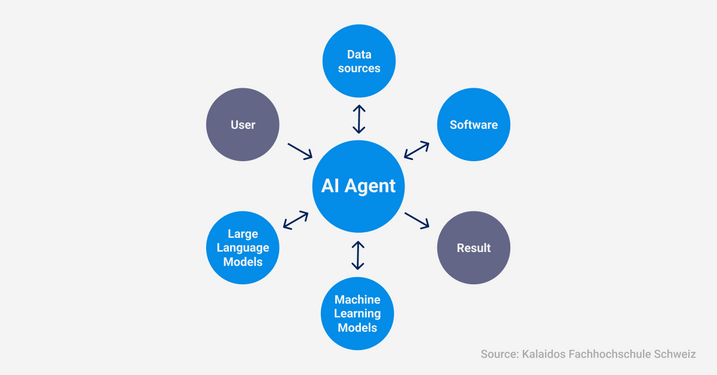
Analysts should also understand how the AI system produced the insight.
Different AI tools use different approaches.
Some generate SQL queries.
Some use statistical models.
Some summarize existing reports.
Some use machine learning models.
Others combine multiple analytical techniques.
The analyst should understand enough about the method to determine whether it is appropriate for the question.
For example, a simple descriptive analysis may be appropriate for understanding historical sales.
A predictive question may require a forecasting model.
A causal question may require experimentation or a stronger statistical design.
Using the wrong analytical method can produce misleading results regardless of how sophisticated the AI appears.
Therefore, analysts should not focus solely on the output.
They should understand the process that produced the output.
Validate Recommendations Separately From Insights
There is another important distinction between an insight and a recommendation.
An insight describes or explains something.
A recommendation proposes what the organization should do about it.
These are not the same thing.
Suppose AI identifies that customers who receive personalized messages have higher retention.
The insight may be useful.

The AI might then recommend that the company send personalized messages to every customer.
That recommendation requires additional evaluation.
What would implementation cost?
Could personalization create privacy concerns?
Would customers react positively?
Is the relationship causal?
Can the organization scale the approach?
What happens if the insight does not apply to every customer segment?
Therefore, recommendations require their own validation process.
Analysts should evaluate the expected benefits, costs, risks, constraints, and alternatives before presenting AI-generated recommendations to decision-makers.
Use Human Judgment Where Context Matters
AI can process enormous quantities of structured information, but business context is often difficult to capture completely.
An experienced analyst may know that a company recently changed its pricing strategy.
A product manager may know that a major competitor launched a new product.
A finance leader may know that an accounting policy changed.

An operations manager may know that a distribution center experienced an unexpected shutdown.
These contextual factors can dramatically change how data should be interpreted.
Therefore, analysts should incorporate subject-matter expertise into AI validation.
The strongest analytical process combines machine-generated pattern recognition with human understanding of the business environment.
AI can tell you what the data appears to show.
People can help explain what happened in the real world.
Document the Validation Process
As organizations increasingly rely on AI for analytics, documenting validation becomes more important.
When an important insight is presented to leadership, analysts should be able to explain where the data came from, how the analysis was performed, what assumptions were used, what validation checks were conducted, and what limitations remain.
This creates transparency.
It also makes future investigations easier.
Suppose an executive challenges an AI-generated insight six months later.
If the validation process was documented, the analyst can reconstruct the reasoning.
Without documentation, the organization may struggle to determine whether the original insight was reliable.
This is particularly important in regulated or high-risk environments.
Analytical decisions should be traceable.
AI should not become a black box that produces conclusions nobody can explain.
Building a Human-in-the-Loop Analytics Process
The most effective organizations will not treat AI as an independent analyst.
Instead, they will create human-in-the-loop processes.
AI can accelerate data exploration, generate queries, identify patterns, summarize findings, and suggest hypotheses.
The analyst then validates the output, challenges assumptions, investigates anomalies, and determines whether the insight is suitable for business use.
Finally, decision-makers evaluate the implications and determine the appropriate action.
This creates a collaborative model.
AI contributes speed and computational capability.
Analysts contribute reasoning and business understanding.
Executives contribute strategic judgment and organizational context.
Together, these capabilities can produce stronger decisions than any one of them operating independently.
Creating a Practical Validation Mindset
Validation should not become so complicated that analysts stop using AI altogether.
The goal is not to manually reproduce every calculation for every low-risk task.
Instead, validation should be proportional to the potential impact of the decision.
A quick exploratory question may require relatively light verification.
A financial forecast used for executive planning requires much stronger validation.
An AI-generated recommendation affecting customers, employees, pricing, or major investments requires even greater scrutiny.
This risk-based approach allows organizations to benefit from AI’s speed without abandoning analytical discipline.
The key is knowing when deeper validation is necessary.
The higher the potential consequence of being wrong, the stronger the validation should be.
How Analysts Can Become More Valuable in the AI Era
The rise of AI does not eliminate the need for analysts.
Instead, it changes what makes an analyst valuable.
In the past, technical execution was a significant part of analytical work. Analysts needed to know how to query databases, build reports, manipulate spreadsheets, and create visualizations.
Those skills remain useful.
However, AI is increasingly capable of assisting with many technical tasks.
Consequently, the value of human analysts increasingly shifts toward problem framing, critical thinking, validation, business understanding, communication, and decision support.
The analyst who simply writes SQL may become less differentiated when AI can generate SQL instantly.
The analyst who understands whether the generated SQL actually answers the business question becomes much more valuable.
Similarly, the analyst who can challenge an AI-generated conclusion, identify a hidden assumption, discover a data quality problem, and explain the business implications becomes difficult to replace.
This is why analytical judgment is becoming a defining skill.
The Future of AI-Assisted Business Analytics
AI will continue to become more capable.
Future analytics platforms will likely generate more sophisticated insights, automate more analytical workflows, and interact with users through natural language.
This will make analytics more accessible to non-technical employees.
However, accessibility will create a new challenge.
When more people can generate insights, organizations will need stronger standards for determining which insights can be trusted.
The problem will no longer be simply obtaining information.
It will be distinguishing reliable information from convincing but unsupported conclusions.
This means data literacy will become increasingly important across organizations.
Employees will need to understand how data is generated, what metrics mean, how analytical claims are validated, and where uncertainty exists.
Analysts will play a central role in building this capability.
They will become not only producers of analysis but also guardians of analytical quality.
Artificial intelligence is transforming Business Analysis and Data Analytics.
It can accelerate data exploration, automate repetitive tasks, generate SQL, identify patterns, summarize complex datasets, and provide recommendations in seconds. These capabilities can dramatically increase analyst productivity.
Nevertheless, speed must not come at the expense of accuracy.
AI-generated insights should be treated as analytical hypotheses that require appropriate validation before they become the basis for important decisions.
The analyst’s role is therefore not simply to ask AI for an answer.
It is to determine whether the answer deserves to be trusted.
That requires validating the business question, checking the source data, confirming definitions, recalculating important figures, examining data grain, distinguishing correlation from causation, considering historical context, investigating anomalies, testing alternative explanations, checking sample sizes, examining bias, comparing independent data sources, understanding the analytical methodology, and evaluating recommendations separately from observations.
Most importantly, analysts must bring business context into the process.
A dataset can show what happened.
An AI system can suggest why it happened.
But determining whether that explanation is reasonable, whether the evidence is sufficient, and what the organization should do next still requires human judgment.
This is not a weakness of AI.
It is the reason human analytical expertise remains essential.
The future of analytics will not belong to professionals who refuse to use AI.
Nor will it belong to those who blindly accept everything AI produces.
It will belong to analysts who know how to work with AI while maintaining rigorous analytical standards.
The strongest modern analyst will therefore be part investigator, part strategist, part data expert, and increasingly part AI evaluator.
AI can generate an insight in seconds.
The analyst’s real value lies in determining whether that insight is accurate, relevant, explainable, and actionable.
That is the difference between using AI to generate answers and using AI to produce better business decisions.