Personalization has become one of the most important strategies in modern business. Customers increasingly expect companies to understand their needs, preferences, behaviors, and circumstances rather than treating everyone as part of one large audience. Whether a customer is browsing an online store, receiving an email, using a financial application, watching content, or interacting with a support team, the experience they receive can often be influenced by data.
At the center of this transformation is data.
Businesses have always tried to understand their customers. Traditionally, however, that understanding was based on broad market research, customer surveys, sales conversations, and assumptions about what particular customer groups might want. Today, organizations can collect and analyze information from digital interactions, transactions, websites, mobile applications, customer service platforms, social media, loyalty programs, and many other sources.
As a result, companies can move from simply asking what customers generally want to understanding what a particular customer may need at a particular moment.
However, personalization is not simply about collecting more information. Having thousands or millions of customer records does not automatically create a personalized experience. The real challenge is transforming raw data into meaningful customer understanding and then using that understanding responsibly to influence the customer experience.
This is where Business Analysis, Data Analytics, Business Intelligence, artificial intelligence, and customer strategy intersect.
Understanding Personalization
Personalization is the practice of using information about an individual or a group of customers to create experiences, recommendations, communications, products, services, or interactions that are more relevant to them.
At a basic level, personalization could mean addressing a customer by name in an email. However, modern personalization goes much further.
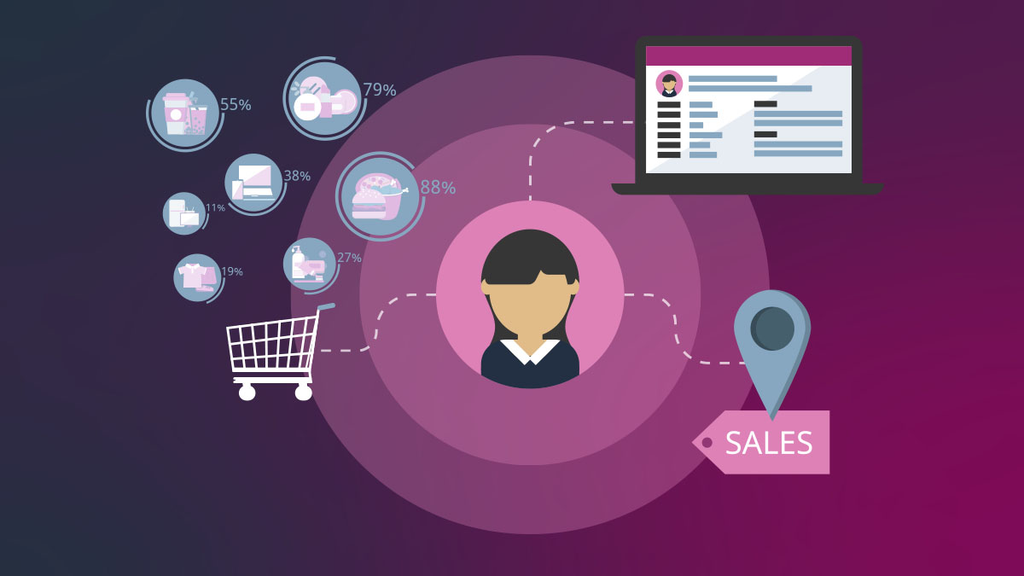
A streaming platform may recommend content based on what someone has previously watched. An online retailer may display products related to previous purchases or browsing behavior. A financial application may provide insights based on spending patterns. A marketing platform may change the message a customer receives depending on their stage in the buying journey.
In each case, the organization is using information to make an experience more relevant.
Therefore, personalization is not simply a marketing technique. It is a broader business capability that depends on understanding customers and responding to that understanding effectively.
Data provides the foundation for that capability.
Why Data Is the Foundation of Personalization
Personalization requires knowledge.
A business cannot meaningfully personalize an experience if it knows nothing about the person receiving it. The organization needs some form of information that helps it understand the customer’s identity, behavior, preferences, history, context, or likely needs.

For example, imagine an online retailer that knows a customer purchased running shoes three months ago. That information alone could support a simple personalized recommendation. However, if the retailer also knows that the customer frequently purchases fitness clothing, reads articles about marathon training, browses running accessories, and tends to shop during certain periods, the organization has a much richer understanding of the customer’s interests.
The more relevant and reliable the data becomes, the more intelligently the business can personalize the experience.
However, this does not mean that businesses should collect every possible piece of information. Effective personalization depends on relevant data rather than excessive data.
The objective should be to collect and use information that helps answer meaningful business and customer questions.
From Customer Data to Customer Understanding
One of the biggest mistakes organizations make is confusing data with understanding.
A customer database may contain names, email addresses, transaction values, locations, product purchases, and timestamps. These are useful data points, but they do not automatically explain customer motivations.
Analytics creates the bridge between the two.
Suppose a company notices that a customer has purchased a particular product several times. A basic report may simply show the transaction history. A deeper analysis might reveal that the customer purchases the product approximately every six weeks.
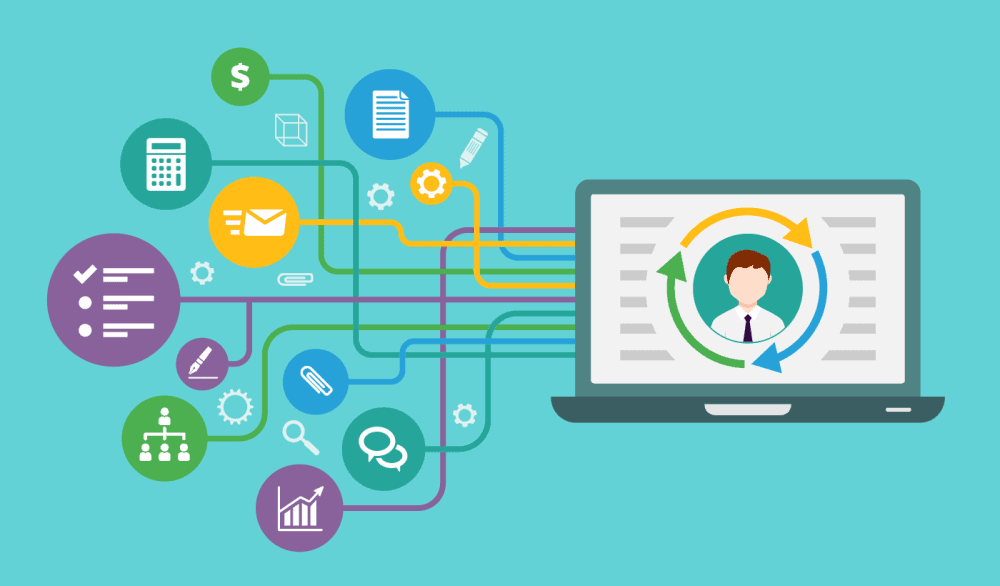
That pattern could create an opportunity for a personalized reminder or recommendation.
Similarly, a business might discover that customers who interact with certain educational content are more likely to purchase a particular service. That insight could influence future content recommendations and marketing communication.
Therefore, personalization becomes powerful when organizations move beyond collecting customer information and start identifying patterns, relationships, behaviors, and signals within that information.
The Different Types of Data That Support Personalization
Personalization can depend on many forms of data, and each type provides a different perspective on the customer.
Transactional data shows what customers actually purchase or pay for. This can reveal product preferences, purchasing frequency, spending patterns, order values, and customer value.
Behavioral data shows how customers interact with a business. Website visits, clicks, searches, application usage, content consumption, and browsing behavior can reveal interests that may not appear in transaction records.
Demographic and profile information can provide additional context. Depending on the business and the appropriate legal basis for using the information, attributes such as age range, location, customer segment, or account type may help organizations create more relevant experiences.
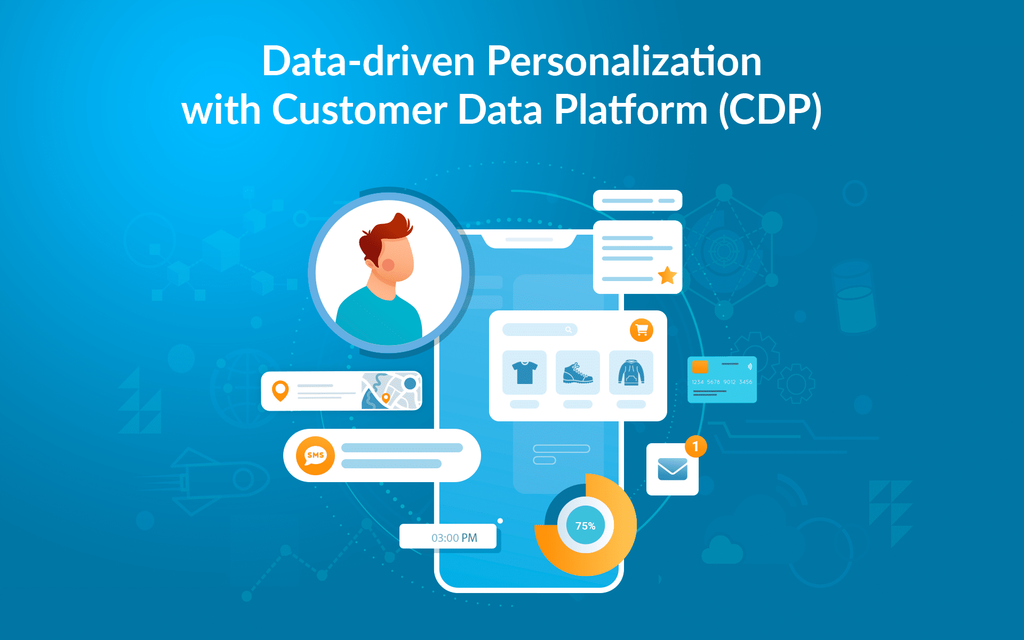
Engagement data provides another important perspective. Email opens, campaign interactions, customer support conversations, loyalty activity, and content engagement can indicate how customers respond to different forms of communication.
Contextual data can make personalization even more useful. The customer’s current device, session behavior, time of interaction, stage in a journey, or recent activity may influence what experience is most appropriate.
When these sources are brought together appropriately, the organization can develop a much more complete view of customer behavior.
The Importance of a Unified Customer View
One of the biggest challenges in personalization is fragmented data.
A company may have customer information stored across its CRM, e-commerce platform, marketing automation system, customer support software, mobile application, payment system, and website analytics platform.
If these systems do not communicate effectively, the organization may have several different versions of the same customer.
The marketing department might know that someone opened several emails. The sales team might know that the person recently spoke with a representative. The e-commerce system might show that they abandoned a shopping cart. Meanwhile, customer support might have an open complaint associated with the same individual.
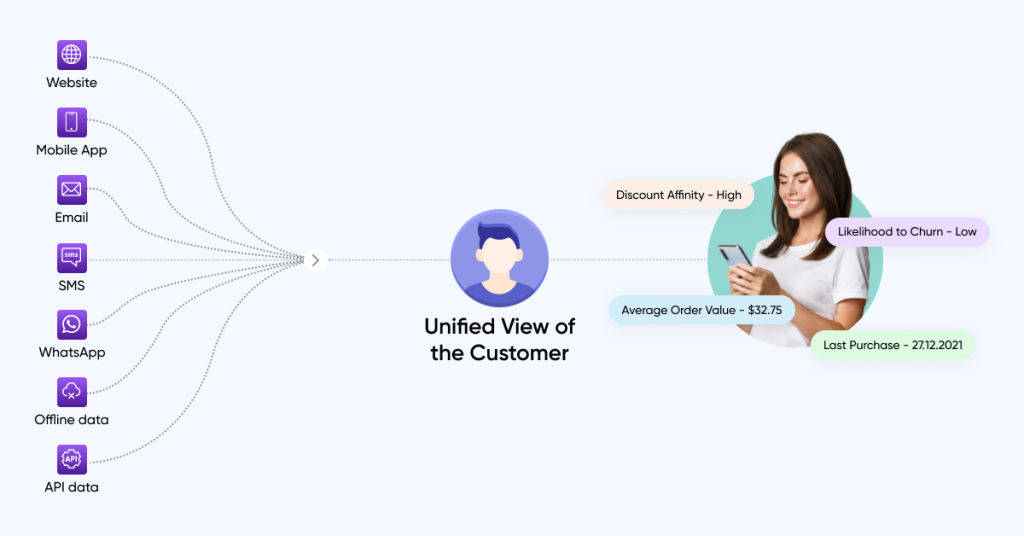
If these signals remain disconnected, the organization may deliver an inappropriate experience.
For example, sending a promotional email to a customer who has an unresolved service complaint can create frustration rather than engagement.
A unified customer view helps the business understand the broader context before deciding how to personalize an interaction.
This is why data integration and customer data architecture are becoming increasingly important to personalization strategies.
Data Quality Determines Personalization Quality
Personalization is only as reliable as the data behind it.
If customer information is inaccurate, incomplete, duplicated, outdated, or inconsistent, personalized experiences can quickly become irrelevant.
Imagine receiving an email recommending a product you purchased yesterday. Instead of feeling understood, you may wonder why the company does not recognize your recent purchase.
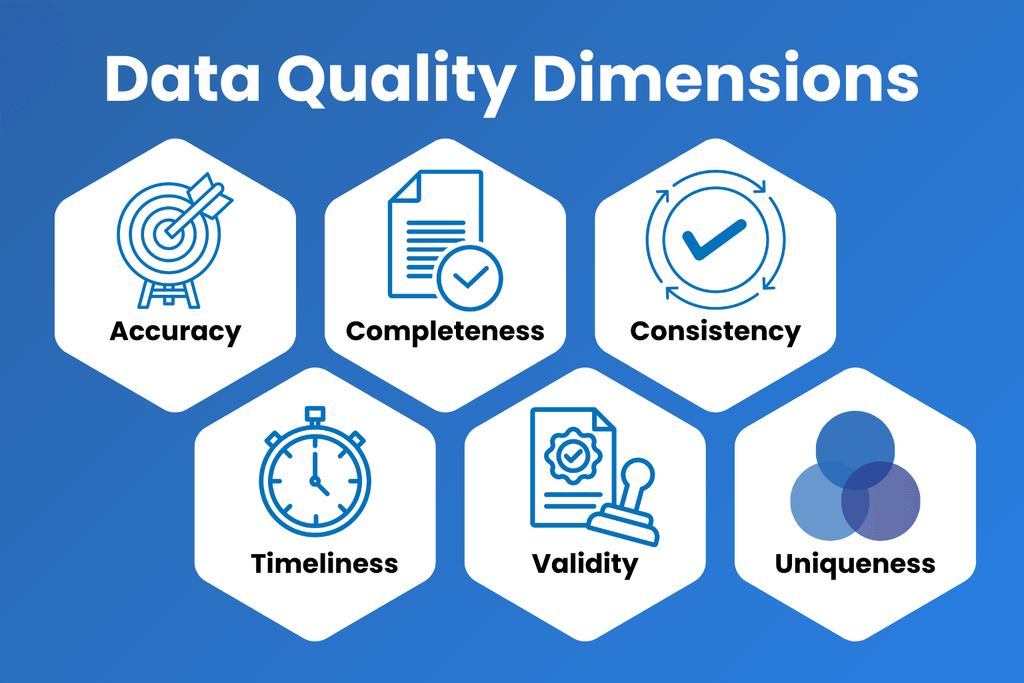
Similarly, if a customer has changed their location but the business continues using an outdated address, location-based recommendations may become irrelevant.
This demonstrates an important principle in analytics: poor data quality creates poor decisions.
Organizations therefore need processes for validating, cleaning, standardizing, and maintaining customer data. Data quality should not be treated as a technical issue that belongs only to the IT department. It directly affects customer experience and business performance.
When personalization depends on customer information, data quality becomes part of the customer experience itself.
Segmentation and the Beginning of Personalization
Before businesses can personalize experiences at an individual level, they often begin with segmentation.
Segmentation involves grouping customers based on shared characteristics, behaviors, needs, or value.
A company might identify customers who purchase frequently, customers who have not purchased recently, customers who spend above a certain threshold, or customers who primarily engage with a particular product category.
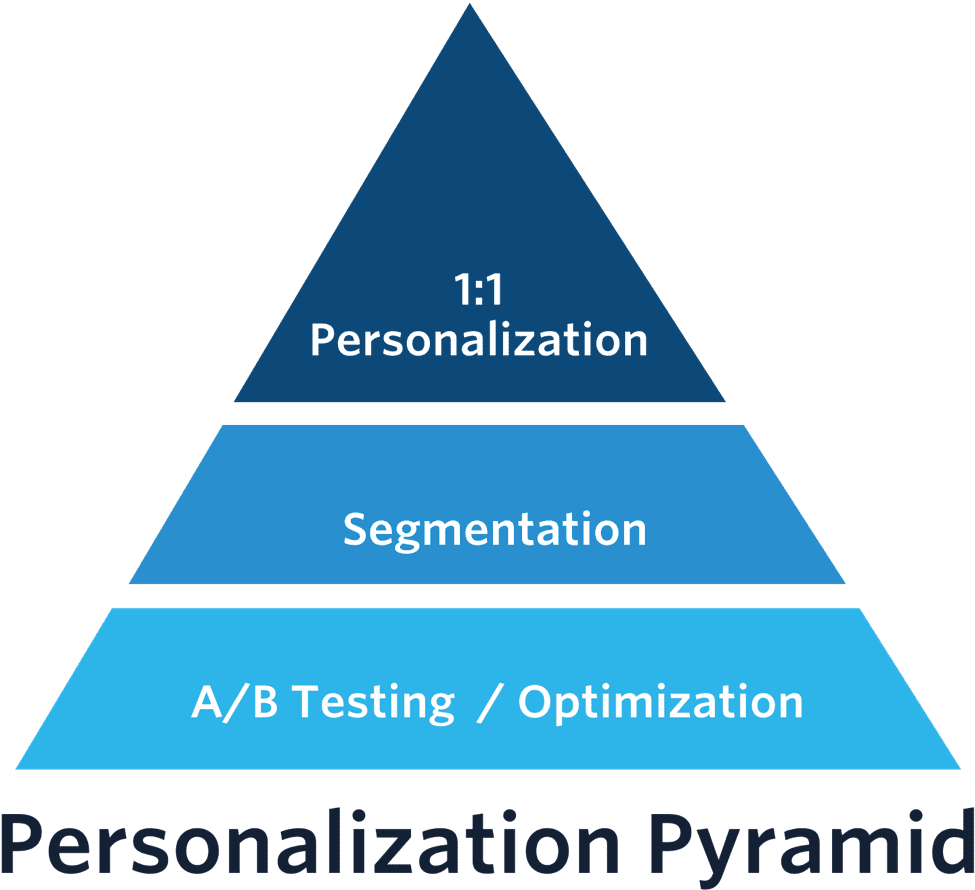
These segments help businesses move away from treating the entire customer base identically.
However, segmentation should not become the final destination.
Two customers may belong to the same segment but still have different preferences and circumstances. This is where personalization becomes more sophisticated.
Instead of saying, “Customers in this segment should receive this message,” the organization can begin asking, “What does this particular customer appear to need based on their recent behavior and context?”
That transition represents a movement from broad targeting toward more individualized experiences.
Predictive Analytics and Personalization
Predictive analytics adds another dimension to personalization by helping organizations anticipate what customers may do next.
Historical data can be analyzed to identify patterns associated with future behavior.
For example, an organization might analyze which customer behaviors are associated with churn. If customers who stop using a service for a particular period become significantly more likely to cancel, that behavioral signal could be used to identify customers who may need additional engagement.
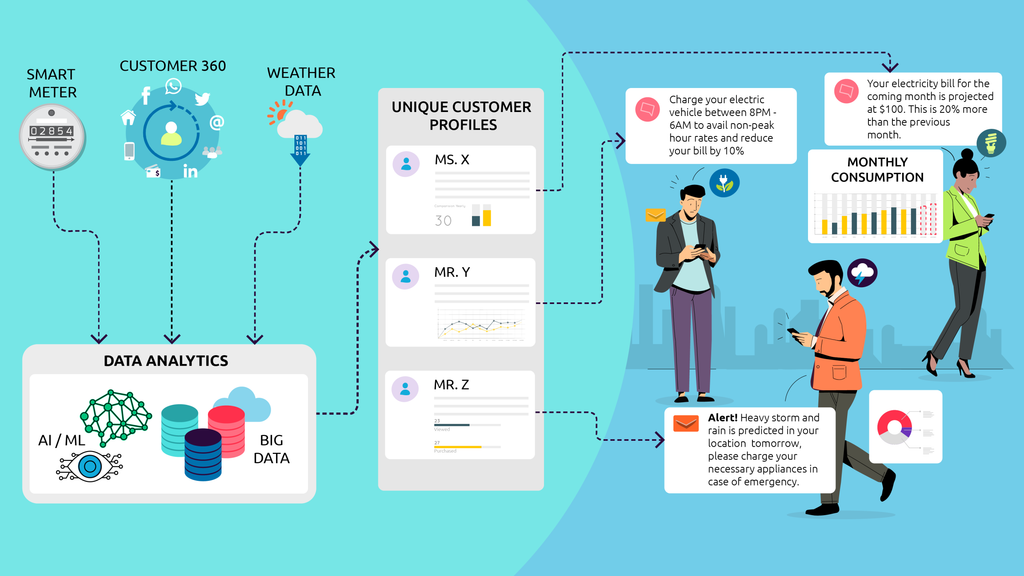
Similarly, an e-commerce business might analyze purchasing patterns to estimate which products a customer is most likely to purchase next.
The purpose of predictive personalization is not to claim that the organization knows exactly what the customer will do. Rather, it is to use available evidence to make more informed decisions about what experience may be relevant.
This distinction is important because predictions are probabilities, not certainties.
Artificial Intelligence Is Changing Personalization
Artificial intelligence is significantly expanding the possibilities of personalization.
Traditional personalization often depends on predefined rules. A business might create a rule stating that customers who purchased product A should receive a recommendation for product B.

AI can analyze much larger and more complex datasets and identify patterns that may be difficult to detect manually.
Machine learning models can evaluate behavioral signals, customer interactions, purchase history, engagement patterns, and other variables to generate predictions or recommendations.
Generative AI introduces another layer by allowing businesses to personalize content itself.
Instead of simply deciding which customer should receive a particular message, AI can potentially help generate or adapt messages based on customer context.
However, AI does not eliminate the need for good data.
In fact, it makes data quality, governance, validation, and human oversight even more important. A sophisticated model trained on inaccurate or biased data can produce sophisticated but unreliable personalization.
Therefore, AI should be viewed as an accelerator of personalization, not a substitute for sound data practices.
Personalization Across the Customer Journey
Personalization can influence nearly every stage of the customer journey.
During awareness, data can help businesses determine which topics, channels, or messages may be most relevant to particular audiences.
During consideration, behavioral information can help identify what products, services, or educational resources a customer appears to be evaluating.
During purchase, personalization can simplify the buying process by presenting relevant products, payment options, recommendations, or information.
After purchase, customer data can support onboarding, product education, cross-selling, loyalty programs, and customer support.
Even when customers are at risk of leaving, analytics can help identify warning signals and create appropriate retention strategies.
Consequently, personalization should not be viewed as something that happens only in marketing campaigns. It can become part of the entire customer experience.
The Business Value of Personalization
The primary business argument for personalization is relevance.
When customers receive information that is more closely aligned with their needs, they may be more likely to engage, purchase, remain loyal, or continue using a service.
However, businesses should not assume that personalization automatically creates value.
Personalization needs to be measured.
Organizations should examine whether personalized experiences actually improve important business outcomes such as conversion, retention, average order value, customer lifetime value, engagement, customer satisfaction, or operational efficiency.
For example, if personalized recommendations increase clicks but do not increase purchases, the organization needs to investigate why.
Perhaps the recommendations are interesting but not commercially relevant. Perhaps the customer is clicking out of curiosity. Perhaps the recommendations are appearing at the wrong stage of the journey.
This is where analytics becomes essential.
Measuring the Effectiveness of Personalization
Measurement should begin with a clear business objective.
If the objective is increasing conversion, the organization should establish a baseline and compare customer outcomes before and after personalization.
Testing is particularly valuable.
Businesses can compare customers who receive a personalized experience with an appropriate control group that receives a standard experience. This can help determine whether the personalization itself contributed to the observed improvement.
Without proper testing, organizations may mistakenly attribute positive outcomes to personalization when other factors caused the change.
For example, sales might increase during a seasonal promotion regardless of whether personalized recommendations were present.
Good analytical practice therefore requires organizations to distinguish correlation from causation whenever possible.
Personalization Can Go Wrong
Although personalization offers significant benefits, it can also create negative experiences.
Customers may become uncomfortable when a business appears to know too much about them.
A recommendation can feel helpful in one context and intrusive in another.
For example, seeing a recommendation based on a recent purchase may be convenient. However, receiving repeated messages that reveal sensitive assumptions about personal circumstances can feel inappropriate.
This creates an important balance between relevance and privacy.
Effective personalization should make customers feel understood rather than watched.
Organizations must therefore consider not only what data they can technically use but also what data they should use and how customers will perceive that use.
Privacy and Responsible Data Use
Trust is a critical component of personalization.
Customers need confidence that their information is being handled responsibly.
Organizations should understand applicable privacy requirements, establish appropriate data governance practices, control access to sensitive information, and communicate clearly about how customer data is used.
Consent and lawful data processing requirements will vary depending on the jurisdiction, type of information, purpose of processing, and applicable regulations. Therefore, personalization strategies should involve legal, compliance, security, and privacy considerations rather than being designed solely by marketing or analytics teams.
Responsible personalization also means avoiding unnecessary data collection.
The fact that information can be collected does not mean that it should be collected.
A strong personalization strategy asks whether each data element has a legitimate and useful purpose.
The Risk of Biased Personalization
Another important challenge is bias.
Analytics models learn from historical data. If historical data reflects unfair patterns or incomplete representation, personalization systems can reproduce or amplify those problems.
For example, a recommendation model may favor certain customer groups because they historically generated more engagement, while under-serving other groups.
Therefore, businesses need to evaluate personalization models for fairness, accuracy, and unintended consequences.
Human oversight remains important, especially when personalization affects significant decisions or sensitive areas.
The goal should not be personalization at any cost. The goal should be useful, responsible, and trustworthy personalization.
Personalization Requires Collaboration Across Teams
Personalization is not something one department can successfully own in isolation.
Marketing teams understand campaigns and customer communication. Sales teams understand customer needs and commercial relationships. Product teams understand user behavior and product experiences. Customer service teams understand customer problems. Data teams understand data architecture, analytics, and models. IT and security teams help ensure that systems and information are managed appropriately.
Bringing these perspectives together creates a stronger personalization strategy.
Business analysts can play an especially important role because they often operate between business requirements and data capabilities.
They can help translate business objectives into analytical requirements, identify relevant data sources, define KPIs, document processes, analyze customer journeys, and communicate findings between technical and business stakeholders.
This makes personalization an excellent example of why professionals who understand both business and data are increasingly valuable.
The Role of Business Intelligence in Personalization
Business Intelligence provides visibility into how personalization initiatives are performing.
Dashboards can help organizations monitor customer engagement, conversion rates, retention, revenue, recommendation performance, campaign effectiveness, and other relevant KPIs.
However, the dashboard should not simply report whether personalization is being used.
It should help decision-makers understand whether personalization is creating value.
An effective BI environment might allow a business leader to compare personalized and non-personalized experiences, examine performance by customer segment, identify underperforming campaigns, and investigate changes over time.
In this way, Business Intelligence becomes part of the feedback loop.
Data supports personalization, personalization creates new customer interactions, those interactions generate additional data, and analytics uses that new information to improve future decisions.
Real-Time Personalization
As businesses become more digitally connected, personalization is increasingly moving toward real-time experiences.
A customer may perform an action on a website, and that action can immediately influence what they see next.
For example, if someone searches repeatedly for a particular product category, the system may adjust recommendations or content during the same session.
Real-time personalization can be powerful because customer intent is often strongest when the interaction is happening.
However, real-time systems also create greater technical and analytical complexity. Data must move quickly between systems, decisions must be generated efficiently, and the organization needs strong controls to ensure that automated actions remain appropriate.
Therefore, real-time personalization should be introduced when the business value justifies the additional complexity.
Personalization Is About Context, Not Just History
One of the most important developments in personalization is the shift from historical behavior to contextual understanding.
Knowing what someone purchased last year is useful.
Knowing what they are trying to accomplish right now can be even more valuable.
A customer’s needs can change depending on time, location, device, recent interactions, life circumstances, business context, or stage in the customer journey.
Therefore, personalization systems should avoid assuming that past behavior always represents current intent.
Historical data should inform decisions, but current context should also be considered.
This is one reason why modern analytics increasingly focuses on behavioral signals and real-time data rather than relying exclusively on static customer profiles.
The Future of Data-Driven Personalization
The future of personalization will likely involve increasingly sophisticated combinations of customer data, predictive analytics, artificial intelligence, automation, and real-time decision-making.
However, technological sophistication will not be the most important factor.
The organizations that succeed will be those that understand the customer and use technology to create genuinely useful experiences.
Personalization should not become an excuse to send more messages, display more recommendations, or automate more interactions.
Instead, it should reduce friction.
It should help customers find what they need faster, understand products more easily, receive relevant information, solve problems more effectively, and interact with businesses in ways that feel natural.
That requires a customer-centered approach to data.