The modern business environment is increasingly shaped by data. Companies use data to understand customers, evaluate performance, optimize operations, forecast demand, manage costs, identify risks, and make strategic decisions. At the same time, organizations are under growing pressure to turn the enormous amounts of data they collect into measurable business value.
This has created an important career opportunity for professionals who can operate comfortably between the worlds of business and data.
The intersection of business and data is where analytical thinking meets commercial understanding. It is where someone can look at a dataset and understand not only what the numbers say, but also why they matter, what they mean for the organization, and what should happen next.
Businesses rarely struggle simply because they lack data. In many cases, they struggle because they have too much data and not enough clarity. Organizations may have customer databases, financial systems, marketing platforms, operational applications, websites, and analytics tools generating information continuously. However, access to data does not automatically create better decisions.
Someone still needs to translate business problems into analytical questions, transform raw information into meaningful evidence, communicate findings to decision-makers, and connect recommendations to business objectives.
That is where professionals who understand both business and data become increasingly valuable.
Understanding the Intersection of Business and Data
Business professionals typically focus on objectives, customers, revenue, costs, processes, strategy, operations, and organizational performance. Data professionals focus on databases, statistics, programming, data models, analytical methods, visualization, and technology.
Historically, these areas were often separated. Business teams identified problems, technical teams processed the data, and analysts delivered reports.
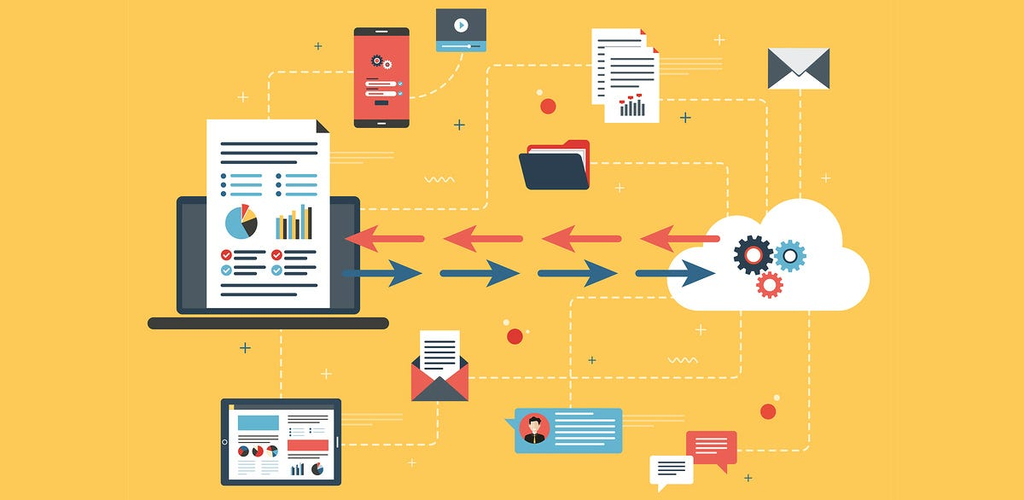
Today, those boundaries are becoming less rigid.
A business leader may need someone who understands customer acquisition while also being able to analyze conversion data. A product manager may need someone who understands product strategy while interpreting user behavior. An operations manager may need someone who understands process efficiency while using Business Intelligence tools to monitor performance.
As a result, professionals who can move between business conversations and analytical environments have a significant advantage.
They understand what the organization is trying to accomplish and can determine how data can help accomplish it.
That is the real value of working at the intersection of business and data.
Why This Career Path Matters
Businesses are becoming increasingly data-intensive. Digital transactions create customer information, applications generate behavioral data, marketing platforms capture engagement, and enterprise systems record financial and operational activities.
Consequently, organizations have more opportunities to make evidence-based decisions.

However, more data also creates more complexity. Different departments may use different definitions for the same metric. Data may exist in disconnected systems. Reports may contradict one another. Managers may struggle to determine which numbers they should trust.
Therefore, organizations need professionals who can connect data to business context.
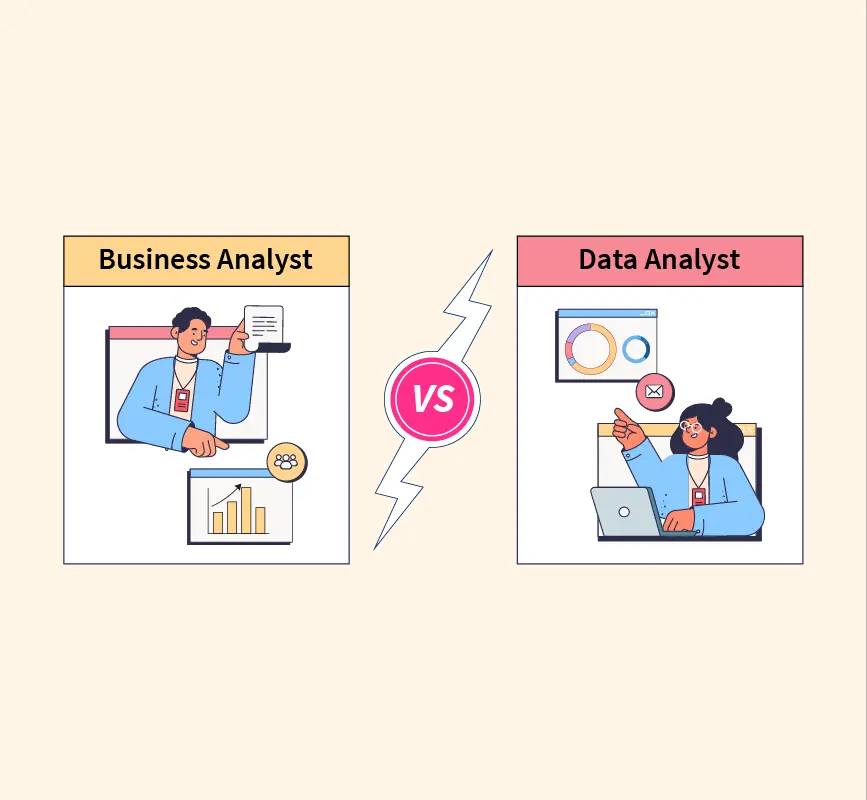
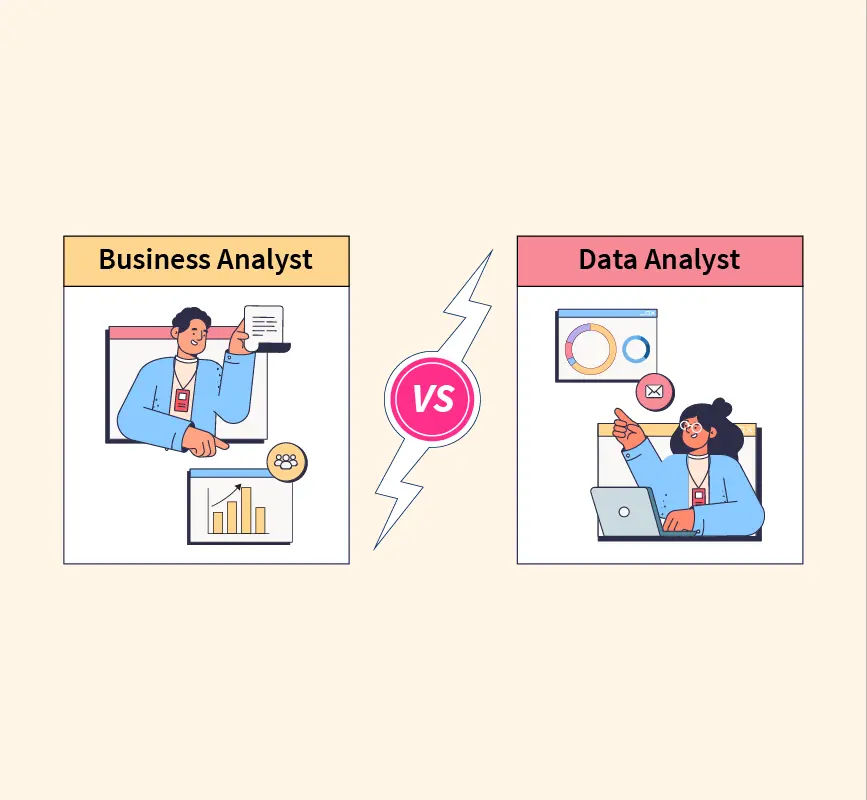
This is why careers such as Business Analyst, Data Analyst, Business Intelligence Analyst, Analytics Consultant, Product Analyst, Marketing Analyst, Operations Analyst, and Analytics Manager continue to evolve.
Although these roles have different responsibilities, they share a common requirement: turning information into business understanding.
Start With Business Problems, Not Tools
One of the biggest mistakes aspiring analysts make is starting with tools.
They learn SQL, then Power BI, Python, Tableau, cloud platforms, machine learning, or artificial intelligence without understanding how those technologies solve business problems.
Technical skills are valuable, but tools alone do not create a strong analyst.

A better approach is to start with the problem.
A company may need to understand why revenue is declining. A retailer may need to determine which products generate the highest margins. A subscription business may need to understand customer churn. A marketing team may need to determine which campaigns generate profitable customers.
These are business problems. Data is then used to investigate them.
Instead of learning SQL simply because it is popular, learn it because you need to answer business questions. Instead of building dashboards because they look impressive, build them because decision-makers need visibility into performance.
This problem-first approach develops much stronger analytical thinking.
Develop Strong Business Acumen
Technical knowledge is important, but business understanding separates a technically capable analyst from an effective one.
Business acumen means understanding how an organization creates value and how different activities affect its performance.
You should understand revenue, costs, margins, profitability, customers, conversion, retention, productivity, efficiency, risk, and growth. More importantly, you should understand how these concepts interact.
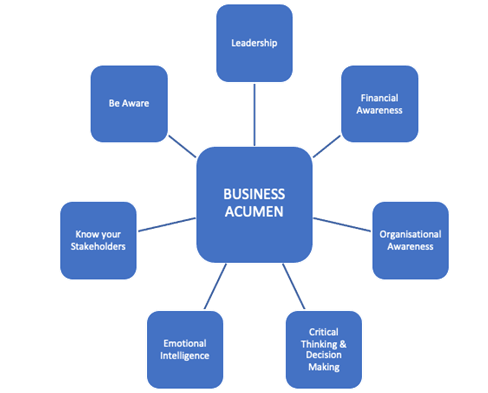
Increasing sales, for example, does not necessarily mean increasing profitability. Acquiring more customers is not always beneficial if those customers have poor retention. Reducing operational costs may appear positive until service quality deteriorates.
Therefore, analysts must understand the business model behind the numbers.
When revenue increases, an analyst should be able to investigate whether the change came from more customers, higher prices, greater transaction volume, expansion into new markets, or a change in product mix.
Business understanding gives analytical work direction.
Build Data Literacy
The next step is learning how data works.
Data literacy involves understanding how data is collected, stored, transformed, analyzed, and communicated.
You should understand tables, relationships, identifiers, dimensions, measures, data types, and basic database concepts. You should also understand how missing values, duplicates, inconsistent formats, and inaccurate records can affect analysis.
Most importantly, understand that data does not simply “speak for itself.”

Data is created through processes, and those processes influence what the data represents.
For example, a customer database containing only people who completed purchases cannot accurately describe all website visitors. Similarly, survey respondents may not represent the entire customer population.
Data literacy helps analysts recognize these limitations before they become business decisions.
Learn SQL as a Problem-Solving Language
SQL is one of the most valuable technical skills for professionals working with business data.
However, becoming effective with SQL requires more than memorizing syntax. You need to understand data relationships and translate business questions into queries.
When a manager asks which products generated the highest revenue last quarter, you need to determine where product and transaction information reside, how the tables relate, which dates define the quarter, and how revenue should be calculated.
That requires analytical thinking before writing the query.

Learn SQL through realistic business scenarios involving customers, sales, profitability, inventory, employees, and marketing performance. As you progress, joins, aggregations, common table expressions, subqueries, window functions, and conditional logic become tools for solving business problems.
The goal is not simply to know SQL. It is to think in SQL.
Become Comfortable With Business Intelligence
Business Intelligence provides another important bridge between data and business.
Tools such as Power BI and Tableau allow organizations to transform data into interactive reports and dashboards. However, creating a dashboard is not the same as creating useful Business Intelligence.
A strong BI professional understands KPI design, data modeling, visualization, user requirements, and decision-making workflows.

The objective is not to place as many charts as possible on one screen. It is to make important information easier to understand and act upon.
An executive may need revenue, profitability, growth, and risk information. A sales manager may need pipeline, conversion, and regional performance. An operations manager may need service levels, turnaround times, and bottleneck information.
The dashboard should therefore be designed around decisions rather than decoration.
Learn to Ask Better Questions
One of the most underrated skills in analytics is question formulation.
“Why are sales down?” is a starting point, not an analytical question.
A stronger investigation asks whether sales declined because transaction volume decreased, average order value changed, customer acquisition slowed, existing customers purchased less frequently, or specific products underperformed.
Good analysts move from symptoms to causes.

If profitability declines, they investigate revenue and cost drivers. If retention declines, they investigate customer segments, product usage, service experiences, pricing, and acquisition sources.
The quality of the question often determines the quality of the analysis.
Develop Statistical Thinking
Not every analytics career requires advanced mathematics. Nevertheless, professionals working with data need a practical understanding of statistics.
You should understand averages, distributions, variability, correlation, sampling, probability, confidence, and statistical significance.

More importantly, understand what these concepts mean in business situations.
An average can hide important differences between customer segments. Correlation does not prove causation. A small sample can produce unstable conclusions. An apparent trend may simply reflect normal variation.
Statistical thinking helps analysts avoid making confident decisions based on weak evidence.
Learn to Communicate With Decision-Makers
Communication is one of the biggest differentiators in an analytics career.
Decision-makers rarely need to know every technical detail behind an analysis. They need to understand what happened, why it matters, what the evidence suggests, and what should happen next.

Suppose an analysis shows that customer churn increased by 12 percent. Simply reporting that figure is not enough.
The analyst should explain which segments experienced the largest increase, when the change occurred, what factors appear to be associated with it, and what actions could be considered.
Good communication does not eliminate analytical complexity. It translates that complexity into something decision-makers can use.
Build Domain Expertise
As your analytical skills develop, specializing in a business domain can increase your value.
You might focus on finance, marketing, sales, product, operations, retail, technology, logistics, or another industry.
Domain expertise helps you understand what the numbers actually mean.
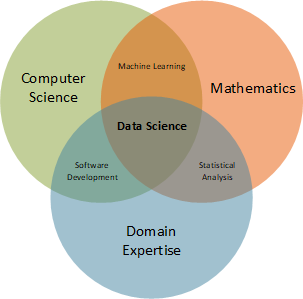
A marketing analyst needs to understand acquisition, attribution, conversion, campaigns, and customer lifetime value. A product analyst needs to understand engagement, retention, experimentation, and adoption. An operations analyst needs to understand capacity, efficiency, service levels, and bottlenecks.
The combination of analytical capability and domain knowledge can make you significantly more valuable than someone who knows analytics tools but lacks business context.
Learn to Work With AI
Artificial intelligence is changing analytics, and professionals should learn to use it rather than ignore it.
AI can assist with SQL generation, data exploration, documentation, summarization, anomaly detection, forecasting, and repetitive analytical tasks.
However, AI should not replace analytical judgment.

An AI-generated query can contain a logic error. A generated insight can overlook business context. A forecast can depend on inappropriate assumptions.
Therefore, analysts need to become effective AI collaborators. They should know how to provide context, evaluate AI-generated outputs, validate calculations, question assumptions, and determine when human review is necessary.
The future analyst will not necessarily compete with AI. The analyst will use AI to increase productivity while remaining responsible for analytical quality.
Build Projects That Demonstrate Business Impact
Learning skills is important, but employers also want evidence that you can apply them.
A strong portfolio should not simply contain screenshots of dashboards. It should demonstrate a complete problem-solving process.
For example, you might analyze customer churn, identify the segments most likely to leave, and develop a dashboard that helps managers monitor the problem.
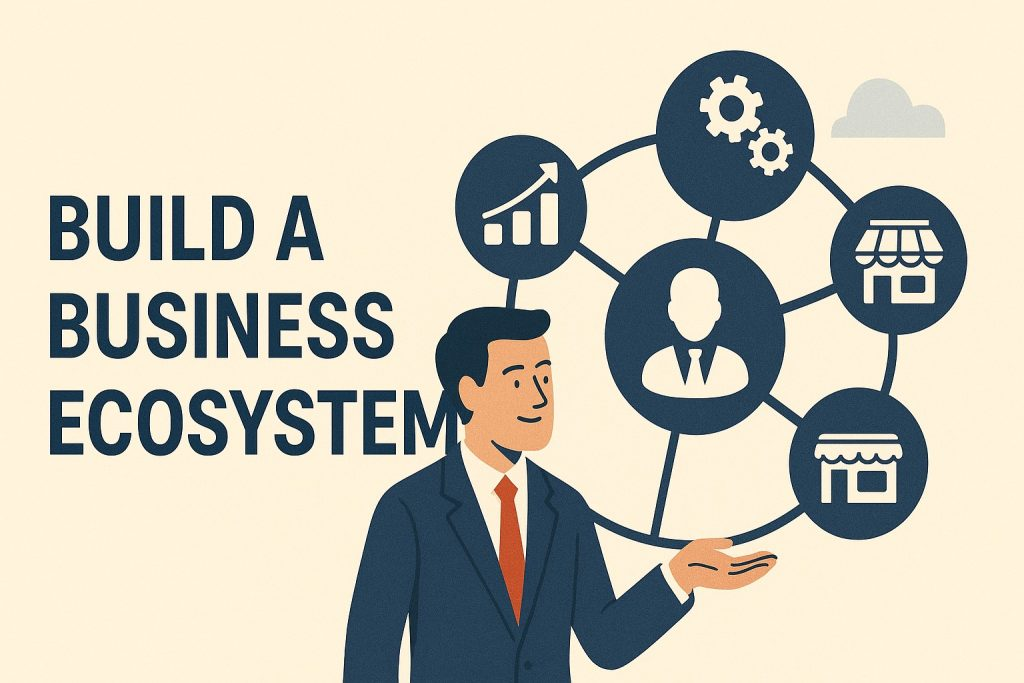
Another project could examine sales performance and investigate why revenue changed across regions.
The important thing is to show the connection between the business problem, the data, the analysis, the insight, and the potential decision.
This turns a technical project into a business case.
A Practical Career Roadmap
Building a career at the intersection of business and data becomes easier when you approach it in stages.
Start by developing business understanding and analytical thinking. Learn how organizations generate revenue, manage costs, serve customers, measure performance, and make decisions. Practice breaking broad problems into specific questions.
Next, develop data literacy and spreadsheet skills. Learn to clean, organize, analyze, and visualize data while explaining what the results mean from a business perspective.

Then learn SQL. Focus on querying real business datasets and answering questions about customers, sales, products, profitability, and operations. Progress from basic queries to joins, aggregations, CTEs, and window functions.
After that, develop Business Intelligence skills using a platform such as Power BI or Tableau. Learn data modeling, KPI design, visualization, and dashboard storytelling. Build reports that solve realistic business problems rather than simply reproducing tutorials.
Once these foundations are established, build a portfolio containing several substantial projects. Each project should demonstrate how you identified a problem, analyzed the data, generated insights, and connected those insights to business action.
Then strengthen your statistical knowledge and choose a specialization such as marketing analytics, financial analytics, product analytics, operations analytics, or Business Intelligence. Specialization gives your growing technical skills a clear business context.
As you become more advanced, add Python, automation, forecasting, APIs, advanced analytics, or cloud technologies according to your career direction. You do not need to learn everything. Focus on technologies that increase your ability to solve relevant problems.
Finally, develop stakeholder management, presentation, consulting, and strategic thinking. At this stage, your goal should shift from producing analysis to influencing decisions.
The progression is therefore straightforward: understand the business, learn the data, develop technical capability, solve realistic problems, build evidence of your skills, specialize, incorporate AI and advanced analytics, and gradually become a strategic partner.
Measure Your Career by Business Impact
A common mistake analysts make is measuring activity rather than value.
The number of dashboards created, reports delivered, or queries written does not necessarily demonstrate impact.
A stronger analyst asks what changed because of the analysis.
Did reporting become faster? Did the organization identify revenue leakage? Did a marketing team improve campaign efficiency? Did management discover a profitable customer segment? Did an operations team reduce delays?
These questions change how you approach your career.
You stop thinking of yourself as someone who produces reports and start thinking of yourself as someone who helps organizations make better decisions.
That is a much stronger professional identity.
Develop a Career Identity Around Outcomes
As your experience grows, think carefully about how you position yourself.
Instead of saying, “I know SQL, Power BI, Excel, and Python,” explain what those skills enable you to accomplish.
Perhaps you help organizations turn operational data into actionable insights. Perhaps you specialize in customer analytics. Perhaps you improve decision-making through Business Intelligence. Perhaps you combine AI with analytics to automate reporting.
Tools will change.
Business problems will remain.
Therefore, build your professional identity around the problems you solve rather than the tools you currently use.
Keep Learning Without Chasing Everything
The data industry contains countless technologies, platforms, programming languages, cloud services, AI tools, and analytical frameworks.
It is tempting to learn everything. However, this often creates shallow knowledge without meaningful expertise.
Instead, build strong fundamentals and then deepen your capabilities around your career direction.
SQL, business understanding, critical thinking, communication, statistical reasoning, and data visualization will remain valuable even as specific technologies change.
Continuous learning should therefore mean strengthening your foundation while staying open to useful new technologies.
From Analyst to Strategic Partner
As professionals become more experienced, their responsibilities can evolve.
An entry-level analyst may focus on retrieving information and preparing reports. An experienced analyst begins identifying patterns and explaining business performance. A senior analyst may influence strategic decisions and help leaders frame problems. Eventually, an analytics professional can become a strategic partner who helps determine how data should influence business strategy.

This progression is driven not simply by technical skill but by business impact.
The more effectively you connect data to important decisions, the more strategically valuable you become.
Building a career at the intersection of business and data is not about becoming the person who knows the most technologies.
It is about becoming the person who can understand a business problem, use data intelligently to investigate it, communicate the findings clearly, and help decision-makers act with greater confidence.
Technical skills such as SQL, Excel, Python, statistics, data visualization, and Business Intelligence remain important. However, they become significantly more valuable when combined with business acumen, critical thinking, communication, stakeholder management, and domain expertise.
The rise of artificial intelligence makes this combination even more important. As AI automates more technical and repetitive analytical tasks, professionals will need to focus increasingly on problem framing, validation, context, judgment, and decision support.
The future therefore belongs increasingly to professionals who can speak both languages.
They understand what the business wants to achieve.
They understand what the data can reveal.
They understand where the data has limitations.
Most importantly, they know how to turn analytical evidence into meaningful business action.
If you want to build a durable career in analytics, build that bridge.
Learn the business. Learn the data. Learn how they connect. Then learn how to turn that connection into better decisions.
That is where the real value of modern Business Analysis and Analytics lies.