Data has become one of the most valuable assets in modern organizations. Businesses use it to understand customers, forecast demand, measure performance, optimize operations, manage finances, identify risks, and make strategic decisions. As organizations become increasingly dependent on analytics, artificial intelligence, Business Intelligence, and automation, the quality of the underlying data becomes more important than ever.
However, having large amounts of data does not automatically create business value.
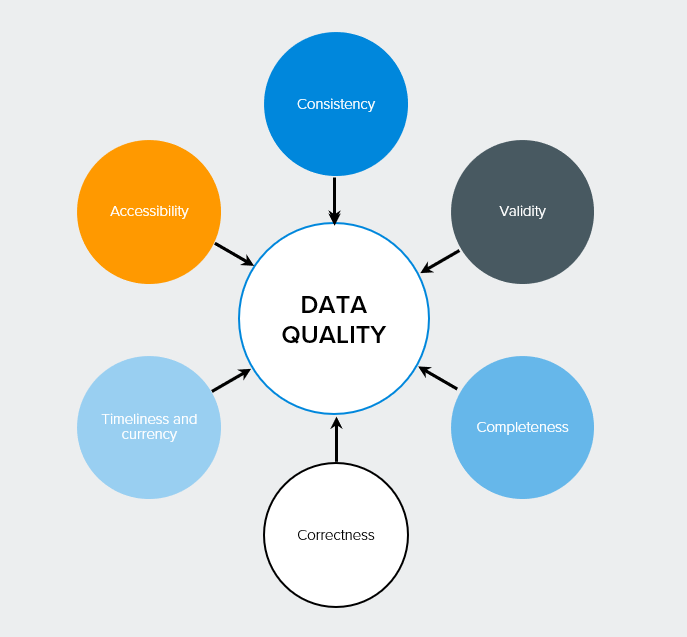
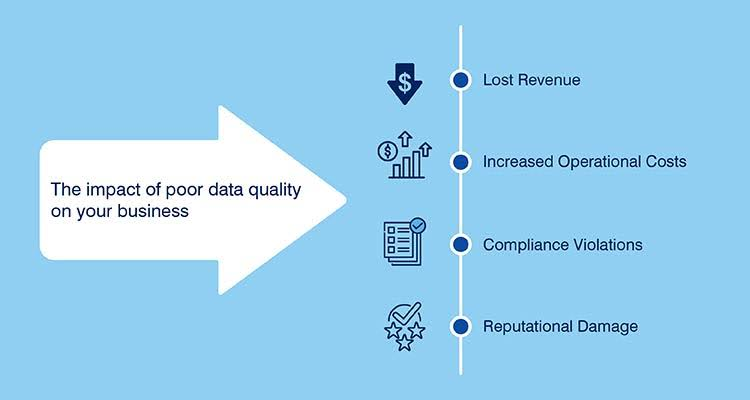
If the data is inaccurate, incomplete, duplicated, outdated, inconsistent, or poorly defined, every process built on top of it becomes vulnerable. A dashboard may display the wrong performance figures. A financial report may underestimate revenue. A marketing team may target the wrong customers. An AI model may learn from misleading patterns. Even a highly experienced analyst can produce an incorrect conclusion when the underlying information cannot be trusted.
This is why data quality should not be treated as a purely technical issue.
It is a business issue.
More importantly, it is a cultural issue.
Many organizations invest in databases, cloud platforms, data warehouses, analytics tools, data governance frameworks, and automated validation systems. Nevertheless, they continue to experience recurring data problems because the responsibility for data quality is often assigned exclusively to IT or the data team.
That approach creates a fundamental weakness.
Data is created and modified across the organization. Sales representatives enter customer information. Marketing teams manage campaign data. Operations teams record transactions. Finance teams process invoices and payments. Customer service teams update account information. Analysts transform and interpret datasets. Consequently, no single department can maintain data quality alone.
A sustainable data quality culture exists when everyone understands that the accuracy and reliability of data is part of their responsibility.
This requires more than implementing technical controls. It requires changing behaviors, processes, expectations, and accountability.
Organizations that successfully build this culture do not simply fix bad data after it appears. They design processes that reduce the likelihood of bad data being created in the first place.
That distinction is extremely important.
Data quality should move from being a reactive cleanup exercise to becoming a continuous organizational discipline.
What Does Data Quality Really Mean?
Before an organization can build a culture of data quality, it needs to understand what data quality actually means.
At its simplest level, data quality refers to the degree to which data is fit for its intended purpose. However, this definition is broader than simply asking whether information is correct.
A dataset can be technically accurate and still be unsuitable for a particular business purpose.
For example, a customer database may contain correct names and email addresses, but if half of the records are several years old, the data may not be useful for a current marketing campaign. Similarly, a sales dataset may contain accurate transaction values but lack the customer identifiers needed to connect sales activity to customer behavior.
Therefore, quality depends on context.
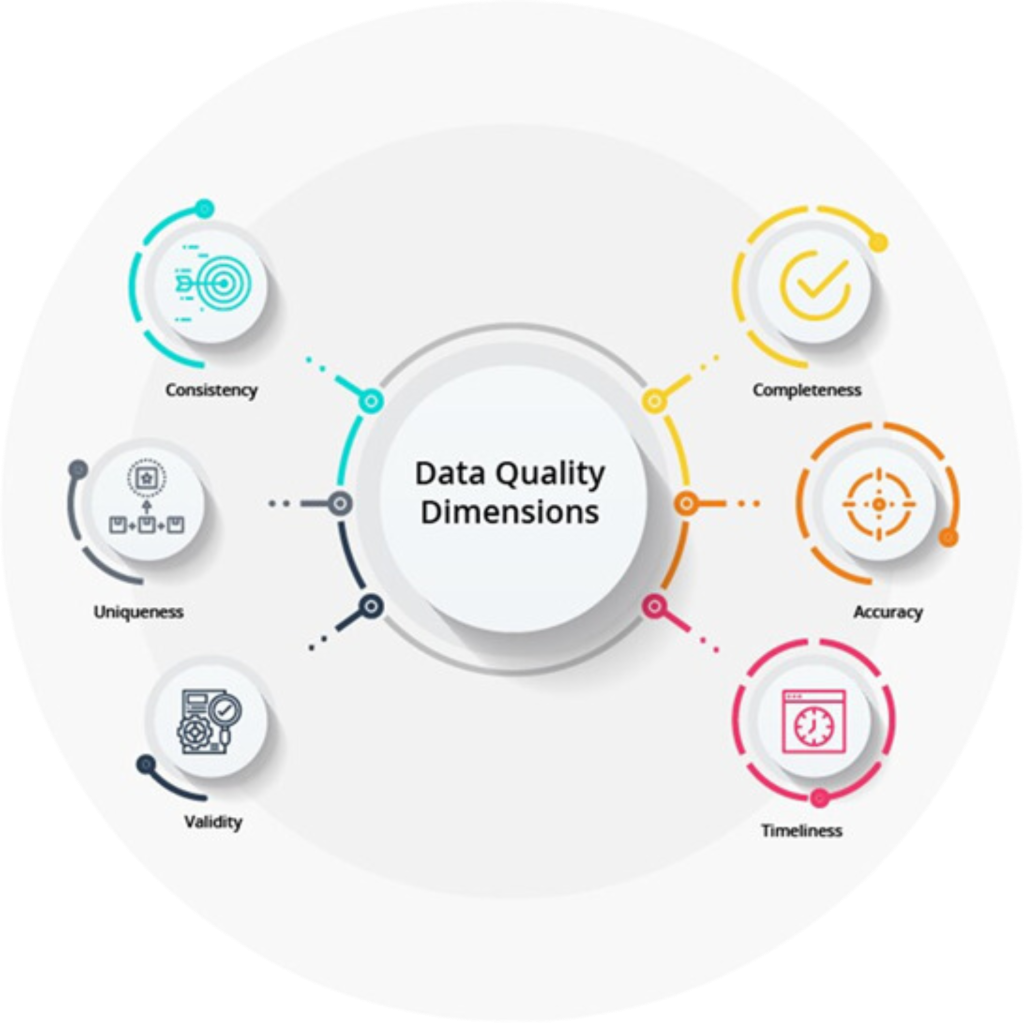
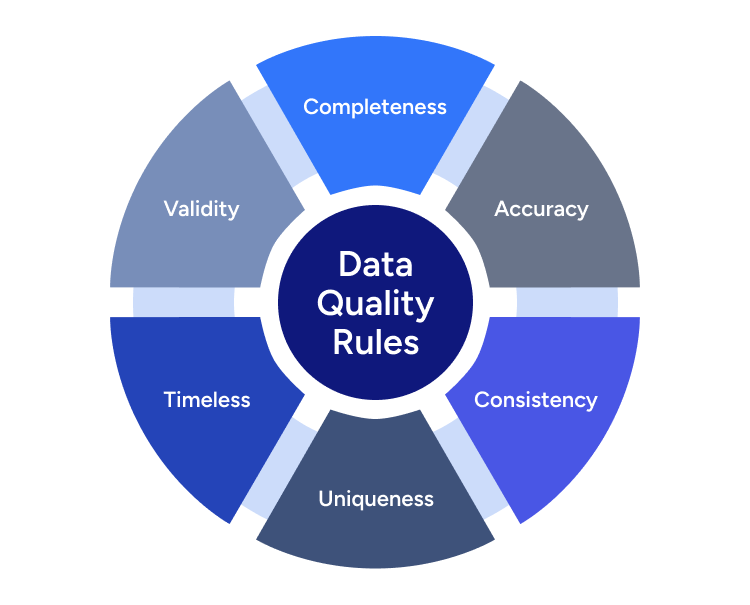
Data should generally be accurate, complete, consistent, timely, valid, unique, and relevant to the purpose for which it is being used.
Accuracy means the data reflects reality. Completeness means important information has not been unnecessarily omitted. Consistency means the same information does not contradict itself across systems. Timeliness means information is sufficiently current for the decision being made. Validity means data follows the expected formats, rules, and constraints. Uniqueness helps prevent duplicate records from distorting analysis.
These dimensions are interconnected.
For example, duplicate customer records can create inaccurate customer counts. Missing transaction values can distort revenue calculations. Inconsistent product names can fragment sales reporting. Outdated customer information can reduce the effectiveness of marketing campaigns.
Therefore, data quality is not about achieving perfection.
It is about ensuring that data can be trusted for the decisions and processes that depend on it.
Why Data Quality Is a Business Problem
One of the biggest obstacles to improving data quality is the belief that bad data is primarily an IT problem.
This perception is understandable because many data quality issues eventually appear in databases, data warehouses, applications, or reporting systems. However, the origin of the problem is often much earlier in the business process.
Consider a sales representative entering a customer’s information incorrectly into a CRM system. The error may begin with a simple data-entry mistake. Later, the information flows into a data warehouse, appears in a dashboard, becomes part of a customer segmentation model, and eventually influences a marketing campaign.
By the time the problem becomes visible, it may appear to be a reporting issue.
In reality, the root cause occurred when the data was initially captured.
This illustrates why organizations cannot solve data quality entirely through downstream cleaning.
Analysts can identify and correct errors. Data engineers can build validation rules. IT teams can improve system controls. However, if the processes creating the data remain poorly designed, the same problems will continue to return.
Consequently, organizations need to treat data quality as part of business process management.
Every department that creates, modifies, consumes, or makes decisions from data has a role to play.
Once this mindset becomes established, the conversation changes.
Instead of asking, “Why is the data team not fixing this?”
Organizations begin asking, “Where was this data created, who owns the process, and how can we prevent the problem from recurring?”
That is the beginning of a data quality culture.
The Difference Between Fixing Data and Building Data Quality
There is a major difference between fixing bad data and building a culture that produces better data.
Fixing data is reactive.
A problem appears, someone identifies it, and corrective action is taken.
Building data quality is proactive.
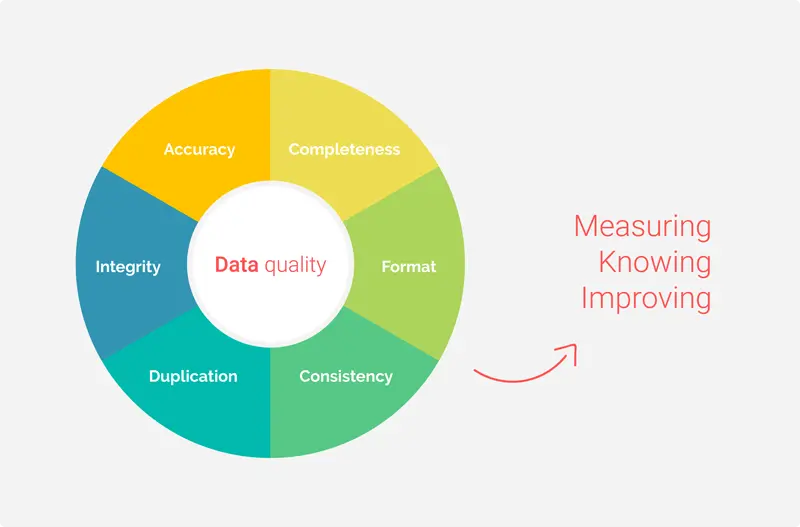
The organization examines why the problem occurred and changes the process so that it is less likely to happen again.
For example, suppose an analyst discovers that thousands of customer records have missing phone numbers. The immediate solution might be to identify the affected records and populate the missing values.
That solves the current problem.
However, it does not answer the more important question.
Why were phone numbers missing?
Perhaps the CRM form does not require a phone number. Perhaps employees skip the field because there is no clear business reason provided. Perhaps customers are not asked for the information during onboarding. Perhaps the system allows incomplete records to move into downstream processes.
Unless the organization addresses the underlying cause, the database will gradually accumulate more incomplete records.
Therefore, data quality improvement should always include root-cause analysis.
The objective is not simply to clean yesterday’s data.
It is to improve tomorrow’s data.
Creating Data Ownership Across the Organization
A strong data quality culture requires clear ownership.
When nobody owns a dataset, problems tend to move between departments without being resolved.
The data team may say that the business owns the information. The business may argue that IT manages the system. IT may explain that the application reflects the requirements provided by the business.

Meanwhile, the data problem continues.
Data ownership creates accountability.
A data owner is responsible for the meaning, quality, and appropriate use of a particular business domain or dataset. This does not necessarily mean that the person personally enters or cleans the data. Instead, ownership means there is someone accountable for ensuring that appropriate standards exist.
For example, customer data may have a business owner within the customer operations function. Product data may be owned by product management. Financial data may have ownership within finance.
The exact structure will vary between organizations.
What matters is that responsibility is explicit.
Once ownership is established, data quality problems become easier to manage because there is a clear path for escalation, decision-making, and accountability.
This also encourages a healthier relationship between business teams and technical teams.
The business understands that it is responsible for defining what good data looks like.
The technical team understands how to implement systems and controls that support those requirements.
Analysts then have a reliable foundation from which to generate insights.
Establishing Clear Data Definitions
One of the most underestimated causes of poor data quality is inconsistent definitions.
Two departments may use the same term while meaning completely different things.
Consider the word “customer.”

For sales, a customer might mean anyone who has completed a purchase.
For marketing, a customer might include anyone who has registered on the website.
For finance, a customer might mean an account with an active billing relationship.
For customer service, a customer might mean anyone who has interacted with support.
All four definitions may be reasonable.
The problem occurs when these definitions are used interchangeably.
Suddenly, one dashboard reports 50,000 customers while another reports 42,000.
Leadership sees conflicting numbers and begins questioning the analytics team.
The underlying problem is not necessarily a calculation error.
It is a definition problem.
This is why organizations need clear business definitions for important data elements and metrics.
Terms such as revenue, active customer, churn, conversion, qualified lead, completed order, and retention should have agreed meanings.
When definitions are standardized, data becomes much more consistent across departments.
Moreover, analysts spend less time debating what numbers mean and more time interpreting what those numbers are telling the organization.
Building Data Quality Into Business Processes
One of the strongest ways to improve data quality is to address quality at the point of creation.
If information is captured incorrectly at the beginning of a process, downstream systems will inherit the problem.
Therefore, organizations should examine the processes through which important data enters their systems.
Imagine an organization that frequently receives incorrect customer addresses.

Rather than repeatedly correcting addresses after they enter the CRM, the company could redesign the data-entry process. The system might validate postal codes, standardize address formats, and prevent obviously invalid information from being submitted.
The same principle applies to other forms of business data.
Required fields can reduce unnecessary missing information. Validation rules can prevent invalid values. Standardized dropdowns can reduce inconsistent terminology. Automated integrations can reduce manual transcription. Duplicate detection can reduce repeated records.
These controls do not eliminate every data quality problem.
However, they reduce the number of errors entering the ecosystem.
This is far more efficient than discovering and repairing those errors months later.
Making Data Quality Measurable
Organizations cannot improve what they cannot measure.
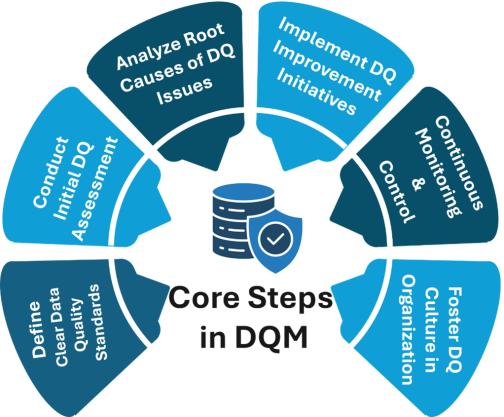
Therefore, a data quality culture requires measurable standards.
The objective is not to create endless data quality metrics. Instead, organizations should identify the quality dimensions that matter most for critical datasets.
For example, a customer dataset might be evaluated based on completeness of contact information, uniqueness of customer records, validity of email addresses, and consistency between CRM and billing systems.
A financial dataset might require stronger controls around accuracy, reconciliation, completeness, and timeliness.
The important principle is that data quality standards should reflect business risk.
Not every dataset deserves the same level of scrutiny.
A minor internal dataset may tolerate occasional inconsistencies, while customer billing data may require extremely strict controls because errors can directly affect revenue and customer trust.
Once quality expectations are defined, organizations can monitor them over time.
This makes data quality visible.
Instead of discussing data quality as an abstract concept, teams can see whether quality is improving or deteriorating.
That visibility creates accountability.
Creating a Data Quality Monitoring Culture
Data quality should not be checked once a year.
Business data changes continuously.
New customers enter systems. Products change. Employees create records. Transactions occur. Systems are updated. Integrations fail. Business rules evolve.
Consequently, data quality must be monitored continuously as well.
Modern organizations can automate many aspects of this monitoring.
Data pipelines can check for missing values. Systems can identify duplicate records. Automated tests can validate expected formats. Reconciliation processes can compare financial totals between systems. Alerts can notify data owners when quality falls below acceptable thresholds.
This approach transforms data quality from a manual inspection exercise into an operational capability.
However, automation should support human accountability rather than replace it.
When a data quality alert appears, someone must investigate the cause.
Otherwise, organizations simply create dashboards full of unresolved warnings.
The purpose of monitoring is not to produce more alerts.
It is to enable faster detection and resolution.
Why Data Quality Should Be Part of Every Analyst’s Responsibility
Business analysts and data analysts occupy a unique position within the data ecosystem.
They work directly with information while also communicating with business stakeholders.
Consequently, they are often among the first people to notice inconsistencies.
An analyst may discover that sales figures differ between two reports. They may notice that customer counts suddenly changed. They may find that a field contains unexpected values. They may discover that a dashboard KPI does not reconcile with the finance team’s numbers.
These observations should not simply be treated as inconveniences.
They are signals.
Analysts should develop the habit of questioning the quality and meaning of the data before using it to make recommendations.
This does not mean analysts must become responsible for every data problem.
Instead, it means they should understand data provenance, definitions, validation, and limitations.
A strong analyst does not simply ask whether a dataset can be queried.
They ask whether it can be trusted.
That distinction becomes particularly important as organizations increasingly rely on automated analytics and AI.
Data Quality and Artificial Intelligence
The growth of artificial intelligence has made data quality even more important.
AI systems depend heavily on the information used to train, evaluate, and operate them. If the underlying data contains significant inaccuracies, inconsistencies, or biases, the resulting outputs can become unreliable.
This creates a new dimension of risk.

In traditional analytics, a data quality problem might produce an incorrect dashboard metric.
With AI, the same underlying problem could influence automated recommendations, forecasts, customer segmentation, fraud detection, or decision-support systems at a much larger scale.
Therefore, organizations preparing for AI adoption must treat data quality as foundational infrastructure.
AI does not eliminate the need for clean data.
It increases the consequences of poor data.
At the same time, AI can also contribute to data quality management. Machine learning models can identify unusual patterns, detect anomalies, classify inconsistent records, and assist with data matching.
Nevertheless, human oversight remains necessary.
An unusual record is not automatically an incorrect record.
AI can identify patterns.
Business experts must determine meaning.
This is another reason why data quality requires collaboration between technical and business teams.
Creating a Culture Where People Care About Data
Technology alone cannot create a data quality culture.
People must understand why data quality matters.
If employees believe that data entry is administrative work with no meaningful consequences, quality will naturally decline.
Organizations therefore need to connect everyday data practices with business outcomes.

A sales representative should understand that inaccurate customer information can affect forecasting and customer communication.
A finance employee should understand that inconsistent transaction data can affect financial reporting.
An operations employee should understand that incorrect inventory information can create supply problems.
Once people understand these consequences, data quality becomes more meaningful.
Training also plays an important role.
Employees should understand how to enter information correctly, why standards exist, and what happens when data is inaccurate.
However, training should not be treated as a one-time event.
As systems, processes, and business requirements change, data practices must evolve as well.
A mature data culture therefore includes continuous communication and education.
Making Data Quality Part of Performance Conversations
Organizations reinforce what they measure and discuss.
If leadership regularly discusses revenue, profitability, customer growth, and operational performance but never discusses data quality, employees naturally conclude that data quality is secondary.
To change this, data quality should become part of relevant business conversations.
When a critical report is reviewed, teams should be able to discuss whether the underlying data is reliable.
When a new analytics initiative begins, data quality risks should be considered early.
When a recurring data problem is identified, leadership should ask whether the process itself needs improvement.
This does not mean turning every meeting into a technical discussion.
Instead, it means recognizing that reliable data is a prerequisite for reliable decisions.
Eventually, this becomes part of organizational thinking.
People begin questioning data before decisions are made.
That is exactly the behavior a mature data culture should encourage.
The Cost of Ignoring Data Quality
Poor data quality creates both visible and invisible costs.
Some costs are easy to measure.
Incorrect invoices may result in financial losses. Duplicate customer records may increase marketing costs. Incorrect inventory information may contribute to stockouts or excess inventory.
Other costs are harder to quantify.
Analysts may spend hours reconciling conflicting reports.
Managers may delay decisions because they do not trust the numbers.
Employees may create manual spreadsheets to compensate for unreliable systems.
Teams may develop competing versions of the truth.
Eventually, these inefficiencies become normalized.
People stop trusting centralized systems and create workarounds.
This is particularly dangerous because the organization may continue investing in analytics technology while the underlying trust problem grows.
A data quality culture prevents this cycle by addressing problems systematically.
Building Trust in Data
Ultimately, the goal of data quality is trust.
Business leaders need to believe that the numbers they see represent reality closely enough to support decisions.
Analysts need confidence that their datasets are accurate enough to produce meaningful insights.
Employees need to trust the systems they use every day.
Customers need confidence that organizations will handle their information responsibly and accurately.
Trust is difficult to build and easy to lose.
A single major reporting error can cause executives to question an entire analytics function.
Consequently, data quality should be treated as part of organizational credibility.
When businesses consistently produce reliable information, decision-making becomes faster.
Meetings become more productive because teams spend less time arguing about numbers.
Analysts spend less time cleaning and reconciling datasets.
Executives become more comfortable using analytics for strategic decisions.
Over time, this creates a powerful competitive advantage.
Moving From Data Cleaning to Data Prevention
One of the clearest signs that an organization is developing a mature data quality culture is a shift from data cleaning toward data prevention.
In immature environments, analysts spend large amounts of time repairing information.
They remove duplicates.
Correct inconsistent formats.
Fill missing values.
Reconcile conflicting records.

These activities remain necessary, but they should not consume the majority of analytical resources.
As the organization matures, it begins asking why the problems keep occurring.
If duplicate customers appear every month, perhaps the CRM process needs improvement.
If financial totals consistently fail to reconcile, perhaps the integration between systems needs redesigning.
If product categories are repeatedly entered incorrectly, perhaps standardized reference data should be introduced.
The focus moves upstream.
Instead of constantly repairing the consequences, organizations improve the process that created the problem.
That is how data quality becomes sustainable.
The Role of Leadership in Building Data Quality
A data quality culture cannot succeed without leadership support.
Employees take their priorities from organizational leadership.
If executives demand immediate reports without allowing time for data validation, teams will naturally prioritize speed over quality.
If leaders treat data quality problems as technical inconveniences, employees will follow the same mindset.
Conversely, when leadership consistently emphasizes trustworthy information, teams begin to understand that quality matters.

Leadership must therefore communicate a clear message.
Reliable data is not optional.
It is part of how the organization operates.
This message should be reinforced through investment, governance, accountability, training, and performance management.
Most importantly, leaders must demonstrate the behavior themselves.
If executives ask where a number came from, whether it is reliable, and what assumptions support it, they encourage analytical discipline throughout the organization.
Building a Business That Trusts Its Data
Building a culture of data quality is not primarily about purchasing better software.
It is about changing how an organization thinks about information.
Data should not be viewed as something that belongs exclusively to IT, analysts, or data engineers. It is created throughout the organization and ultimately influences decisions throughout the organization.
Therefore, responsibility for data quality must be shared.

Organizations need clear ownership, consistent definitions, measurable standards, automated validation, continuous monitoring, strong processes, and leadership commitment. However, these technical and operational mechanisms become truly effective only when employees understand why data quality matters.
The ultimate objective is not to create perfect data.
Perfect data rarely exists.
The objective is to create data that is sufficiently accurate, complete, consistent, timely, valid, and trustworthy for the decisions and processes that depend on it.
That requires organizations to move beyond the idea of data cleaning.
Cleaning is reactive.
Quality culture is proactive.
Cleaning fixes individual problems.
Quality culture improves the systems and behaviors that create those problems.
Cleaning helps organizations recover from poor data.
Quality culture helps prevent poor data from becoming a recurring business problem.
As artificial intelligence, Business Intelligence, automation, and advanced analytics continue to reshape organizations, this distinction will become even more important.
The businesses that succeed will not necessarily be those with the most data.
They will be the organizations that can trust the data they have.
Ultimately, high-quality data is not simply a technical advantage.
It is a foundation for better decisions, stronger operations, more effective analytics, responsible AI, and sustainable business growth.